Politics20 June 1789

Tennis Court Oath

Also called: Serment du Jeu de Paume

Locked out of their hall, the Third Estate deputies gathered in a nearby real-tennis court and swore not to disperse until they had given France a constitution.
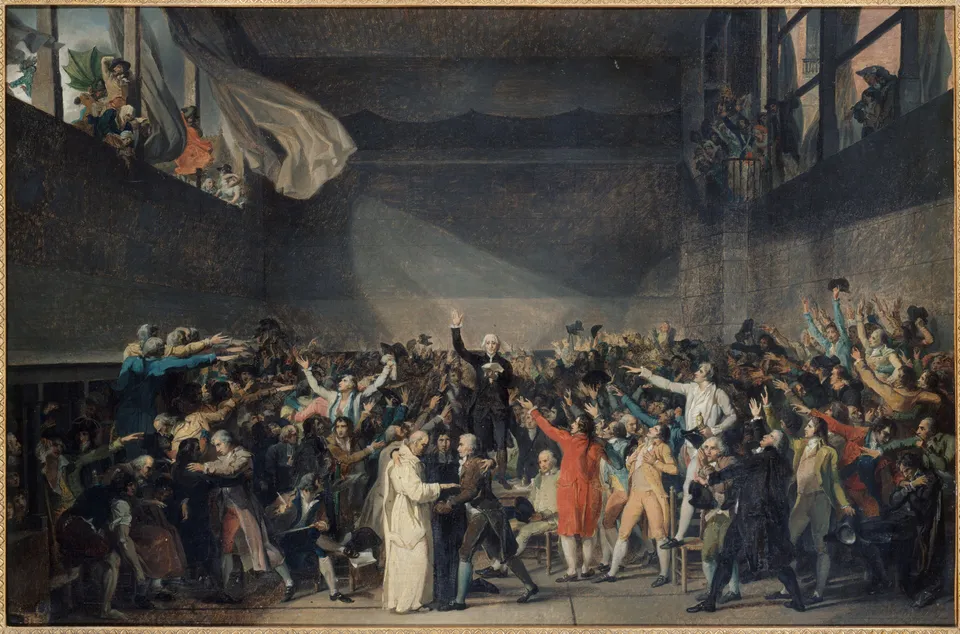
The Tennis Court Oath, 20 June 1789 — Jacques-Louis David, a study for his unfinished great canvas, Musée Carnavalet; the president Bailly leads the oath standing on the table

Jacques-Louis David · CC0 · Source

When the deputies of the National Assembly arrived at their hall on 20 June 1789 they found the doors shut, on the pretext that the king was preparing a royal session; they took it as a move to dissolve them. They moved to a nearby indoor tennis court (jeu de paume) and, led by their president, the astronomer Bailly, swore “never to separate until the constitution of the kingdom is established”. All but one signed.

When the king ordered the orders to meet separately on 23 June, Mirabeau retorted that they were there by the will of the people and would leave only by the force of bayonets. On 27 June the king told the clergy and nobles to join the National Assembly, which on 9 July became the National Constituent Assembly. The painter David set out to record the scene on a huge canvas but never finished it.
The map in 1789

OpenFreeMap © OpenMapTiles © OpenStreetMap contributors

States at the time
France
Places
Jeu de Paume, Versailles

People

  • Comte de Mirabeau1749 – 1791

    participant · Nobleman elected for the Third Estate whose oratory led the early National Assembly towards a constitutional monarchy

  • Emmanuel-Joseph Sieyès1748 – 1836

    participant · Cleric and political theorist whose pamphlet What Is the Third Estate? opened the Revolution and who plotted the coup of Brumaire with Napoleon in 1799

  • Maximilien Robespierre1758 – 1794

    participant · Jacobin leader who dominated the Committee of Public Safety during the Reign of Terror and was guillotined after the Thermidorian Reaction of 1794

  • Louis XVI1754 – 1793

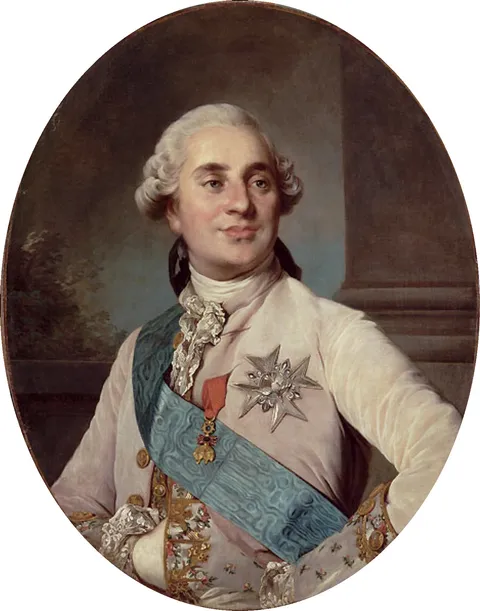
    monarch · King of France, executed during the Revolution

Before and after

Themes that include this event

  • The French Revolution1787 – 1799

    From the Assembly of Notables and the Estates-General to the coup of 18 Brumaire — twelve years that toppled the absolute monarchy, founded a republic, passed through Terror and reaction, and ended with Napoleon