Politics5 May – 17 June 1789

Estates-General of 1789

Also called: Estates-General, National Assembly

At the first Estates-General in 175 years the orders split over how to vote, and the Third Estate proclaimed itself the National Assembly.
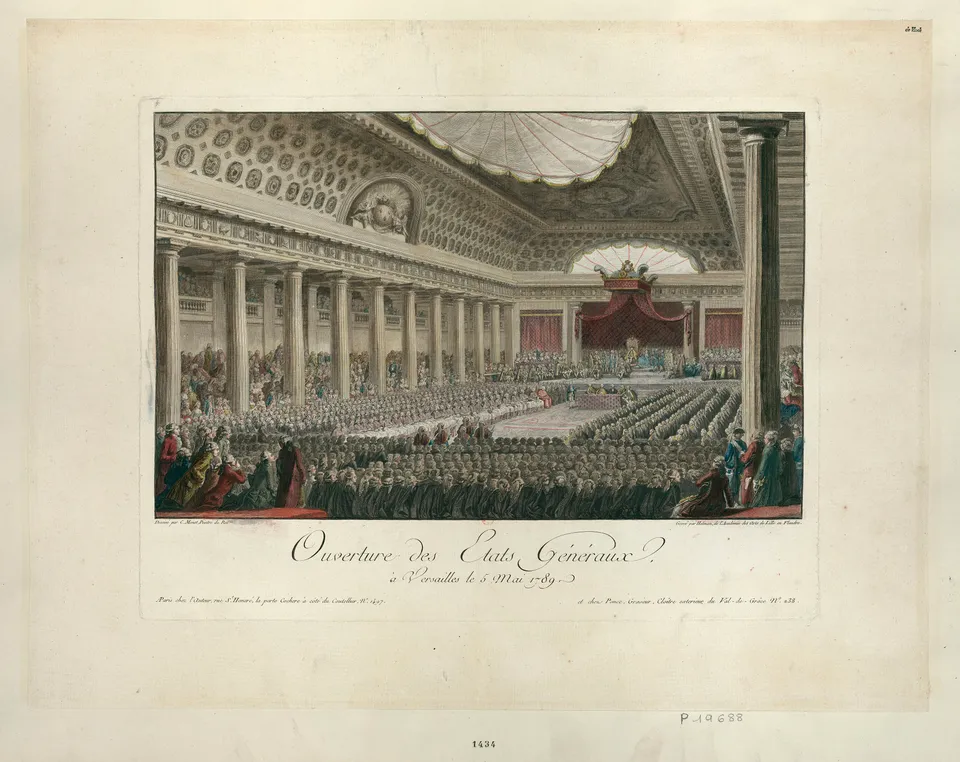
Opening of the Estates-General at Versailles, 5 May 1789 — engraving by Isidore-Stanislas Helman after Charles Monnet, c. 1789, Bibliothèque nationale de France

Helman, Isidore-Stanislas (1743-1806?). Graveur Monnet, Charles (1732-1819). Dessinateur du modèle · Public domain · Source

On 5 May 1789 the Estates-General, the assembly of clergy, nobility and commoners, met at the Hôtel des Menus-Plaisirs in Versailles for the first time since 1614. The Third Estate had about 600 deputies, as many as the other two combined, but if each order voted as a block the privileged orders could always prevail. In January Sieyès had asked in his pamphlet “What is the Third Estate?” and answered “Everything”, to wide acclaim.

Demanding a vote by head, the Third Estate held out for more than a month, and on 17 June, on Sieyès’s motion, it declared itself the “National Assembly”. As some clergy deputies joined it, an assembly of orders began turning into a body representing the nation.
The map in 1789

OpenFreeMap © OpenMapTiles © OpenStreetMap contributors

States at the time
France
Places
Hôtel des Menus-Plaisirs

People

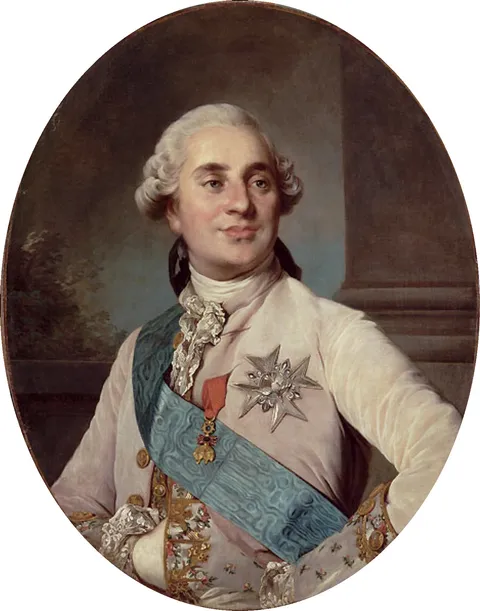
  • Louis XVI1754 – 1793

    monarch · King of France, executed during the Revolution

  • Emmanuel-Joseph Sieyès1748 – 1836

    key figure · Cleric and political theorist whose pamphlet What Is the Third Estate? opened the Revolution and who plotted the coup of Brumaire with Napoleon in 1799

  • Jacques Necker1732 – 1804

    participant · Genevan banker and finance minister to Louis XVI whose dismissal in July 1789 set off the storming of the Bastille

  • Comte de Mirabeau1749 – 1791

    participant · Nobleman elected for the Third Estate whose oratory led the early National Assembly towards a constitutional monarchy

Before and after

Themes that include this event

  • The French Revolution1787 – 1799

    From the Assembly of Notables and the Estates-General to the coup of 18 Brumaire — twelve years that toppled the absolute monarchy, founded a republic, passed through Terror and reaction, and ended with Napoleon