Suleiman I and the Ottoman Golden Age
Also called: Ottoman golden age, Millet system, Battle of Preveza
Under Suleiman I the Ottoman Empire became a great empire spanning three continents. Called “the Lawgiver” for his codification of the laws, he held many peoples together by granting religious communities self-government.
Arild Vågen · CC BY-SA 3.0 · Source
Suleiman I came to the throne in 1520 and reigned for forty-six years. He took Hungary and besieged Vienna (1529), and in the east took Baghdad from the Safavids (1534). His admiral Hayreddin Barbarossa defeated a combined Spanish, Venetian and papal fleet at Preveza in 1538, giving the Ottomans command of the Mediterranean. Suleiman allied with France against the Habsburgs.
The empire was a centralised state ruled by the sultan. Through the devshirme, Christian boys were levied, converted and trained to form the janissaries, the sultan’s standing infantry, and his officials; cavalrymen were given the right to collect taxes from land (timar). Suleiman codified the sultan’s laws (kanun) alongside Islamic law (sharia) and was called Kanuni, “the Lawgiver”. Greek Orthodox Christians, Armenians and Jews who paid the poll tax (jizya) could form religious communities (millets) and keep their faith and customs under their own leaders.
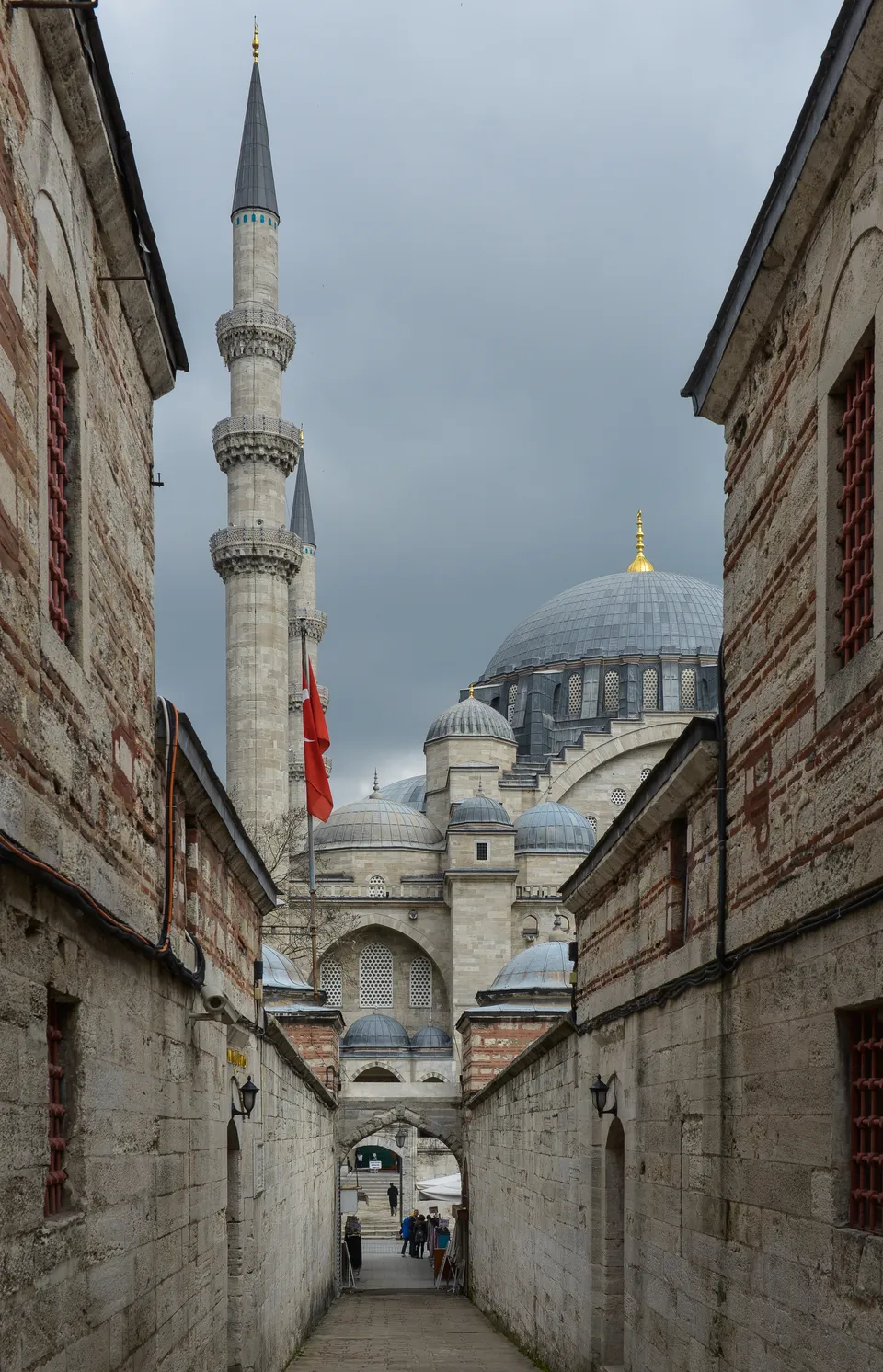
Istanbul flourished as the hub of trade between East and West, and the architect Sinan built the Süleymaniye Mosque (1550–1557). After Suleiman died on campaign in Hungary in 1566 the Ottoman navy was defeated at Lepanto (1571), but the empire remained a great power into the 17th century. In Joseon at the same time, under Jungjong and Myeongjong, the Neo-Confucian sarim scholars were suffering a series of literati purges.