The Atlantic Slave Trade and the Triangular Trade
Also called: Transatlantic slave trade, Triangular trade, Middle Passage
From the 16th to the 19th century European merchants bought more than twelve million Africans as slaves and shipped them to the Americas, in a triangular trade linking Europe, Africa and the Americas.
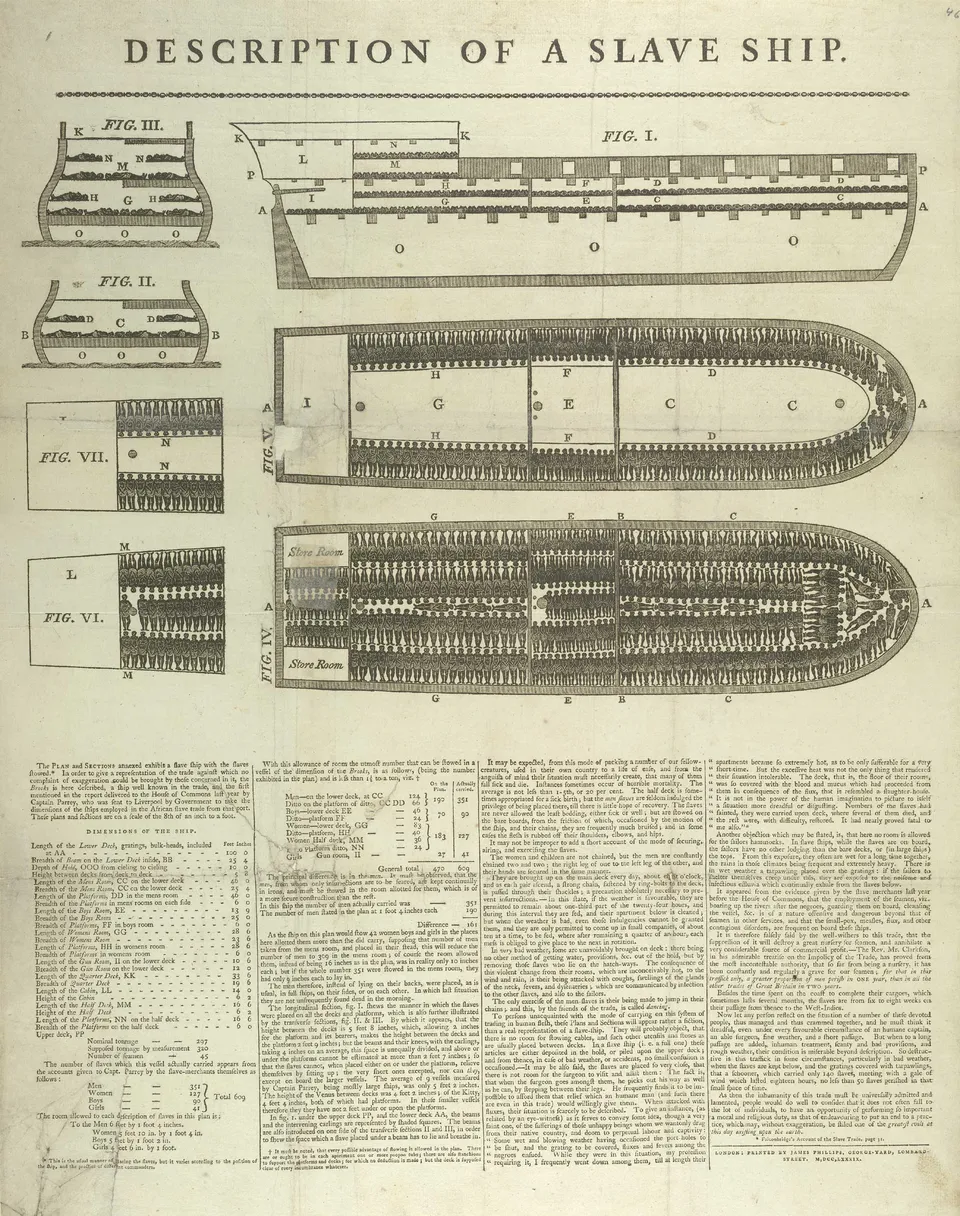
Printed by James Phillips, George Yard, Lombard Street, London · Public domain · Source
As the native peoples of the Americas died in great numbers from disease and forced labour, Europeans turned to Africa for workers. In 1518 King Charles I of Spain licensed the shipment of slaves directly from Africa to the Americas, and Portugal sent many to the sugar plantations of Brazil. From the 17th century the Dutch, English and French joined in, and in the 18th century Britain carried the most. Kingdoms on the West African coast sold war captives and others for guns and cloth.
European ships carried guns, textiles and spirits to Africa, exchanged them for slaves, sold the slaves in the Americas and returned with sugar, tobacco and cotton — the so-called triangular trade. The enslaved crossed the Atlantic chained below deck for up to two months (the Middle Passage), and many died on the way. Some 12.5 million people are estimated to have been embarked, and about 10.7 million to have arrived alive.
Some historians argue that the wealth of the triangular trade helped finance Britain’s Industrial Revolution. Africa, meanwhile, lost young people and suffered slave-raiding wars, and African-descended societies and racial discrimination took root in the Americas. In the late 18th century Enlightenment ideas and religious campaigners launched the abolition movement: Britain banned the slave trade in 1807 and slavery in 1833, the United States ended slavery in 1865 and Brazil in 1888.