Rousseau’s The Social Contract
Also called: The Social Contract, Du contrat social, General will
In 1762 Rousseau published The Social Contract, arguing that sovereignty belongs to the people and that the state must follow the general will, which seeks the common good — the doctrine of popular sovereignty.
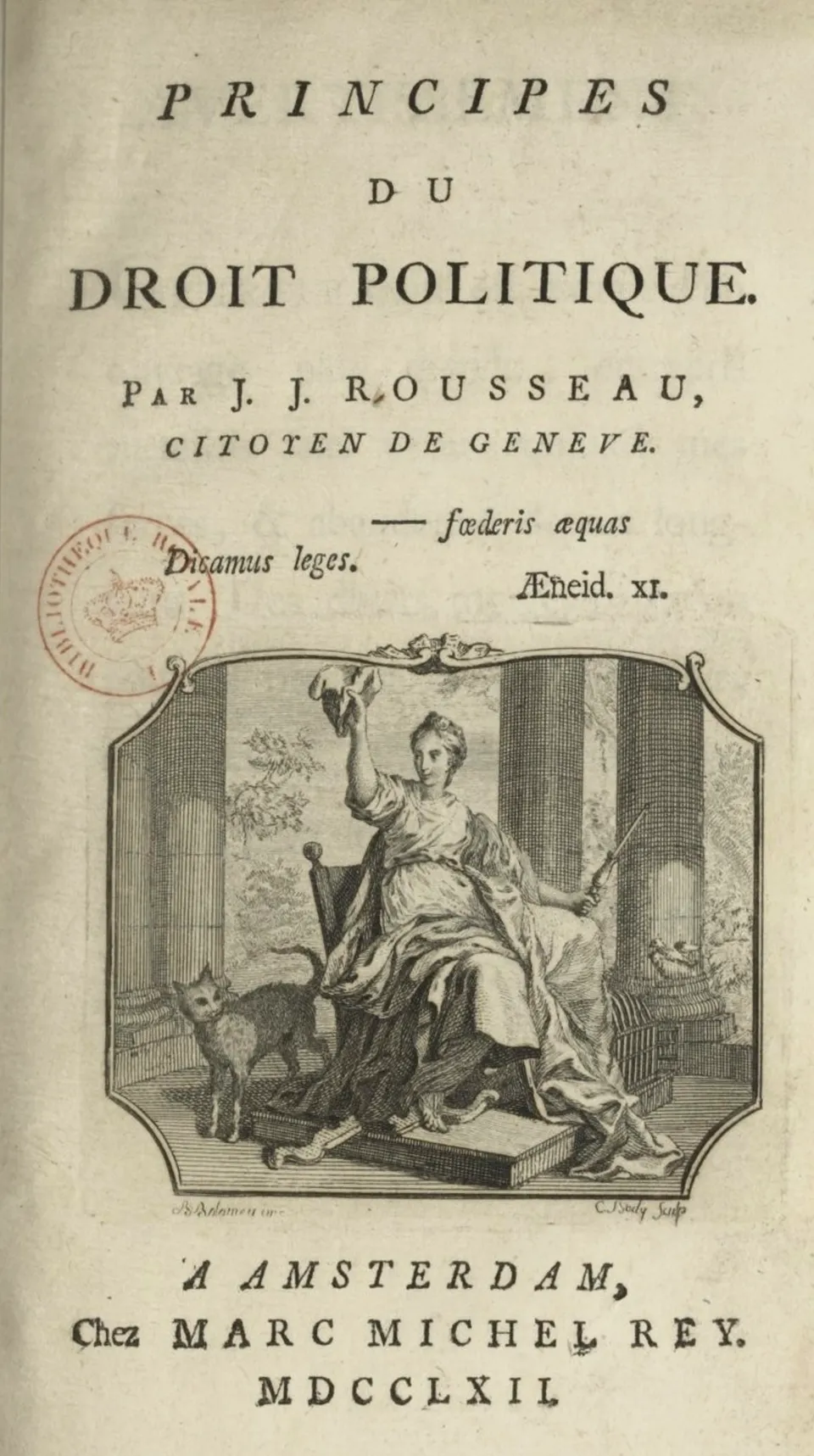
Ambre Troizat · CC BY-SA 4.0 · Source
Rousseau, the son of a Genevan watchmaker, argued in his Discourse on Inequality (1755) that civilisation and private property had bred inequality among people. The Social Contract, published in 1762, opens with the words “Man is born free, and everywhere he is in chains.”
Rousseau held that people form a single community by contract and must follow the general will, which seeks the good of the whole community. Since sovereignty lies with the people and can be neither divided nor transferred, the people should make the laws themselves; this doctrine of popular sovereignty was a more radical democratic idea than Locke’s. Banned in Paris and Geneva along with his treatise on education Emile, published the same year, the book forced him to flee, but his ideas deeply influenced the French Revolution, especially the Jacobins.