Politics632 – 661

The Rashidun Caliphate

Also called: Rightly Guided Caliphs

After Muhammad’s death four caliphs, from Abu Bakr to Ali, led the Muslim world. In this period the Arabs conquered Byzantine Syria and Egypt and Sasanian Persia.
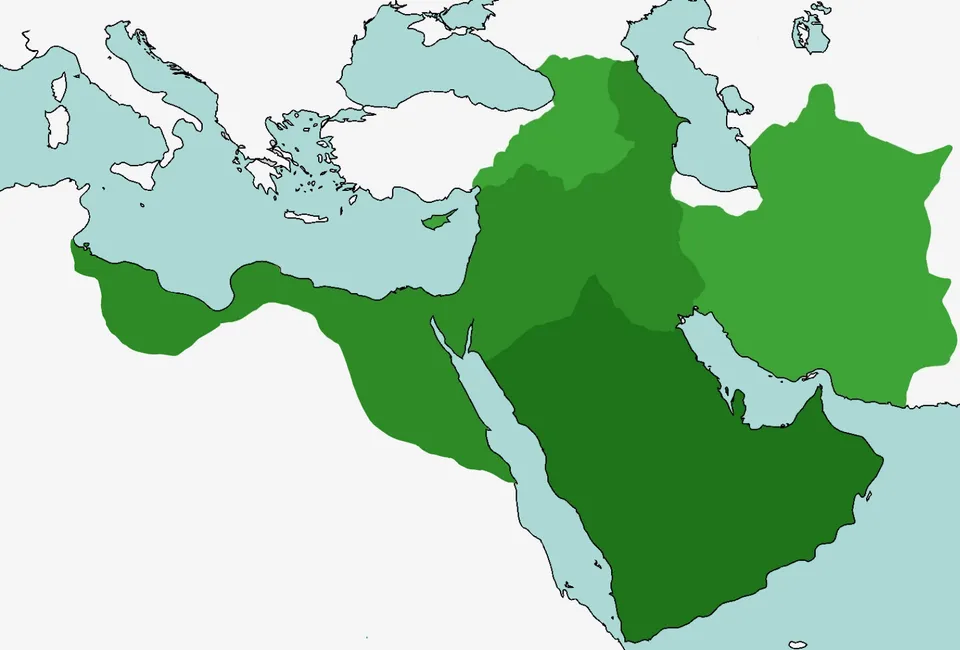
Conquests of the Rashidun caliphate (632–661), from Arabia into Syria, Egypt, Iraq and the Iranian plateau

Geworg D. Baboomian · CC0 · Source

In the Sunni account Muhammad died without naming a successor, and the elders of the community chose his companion Abu Bakr as “successor of the Messenger of God” — the caliph (Shia Muslims hold that Muhammad had designated his son-in-law Ali). Umar, Uthman and Ali followed in turn, and the rule of these four (632–661) is called the Rashidun, or “rightly guided”, caliphate, with its capital at Medina. Abu Bakr brought back the tribes that had broken away after Muhammad’s death (the Ridda wars), and under Umar the Arab armies struck two empires exhausted by long war, taking Syria, Jerusalem and Egypt from Byzantium and Iraq and the Iranian plateau from the Sasanians.

Conquered peoples were not forced to convert. Jews, Christians and others could keep their faith by paying a poll tax (jizya) and a land tax (kharaj); the saying “the sword in one hand and the Qur’an in the other” does not fit the facts. Arab warriors lived on salaries in garrison cities such as Kufa, Basra and Fustat, and Umar fixed the Islamic calendar from the year of the Hijra.

Yet quarrels over succession grew. When Uthman was murdered by rebels in 656, Ali became caliph, but Uthman’s kinsman Muawiya, governor of Syria, refused to accept him and civil war followed. With Ali’s assassination at Kufa in 661 and Muawiya’s founding of the Umayyad dynasty, the age of elected caliphs came to an end.

The map in AD 632

OpenFreeMap © OpenMapTiles © OpenStreetMap contributors

States at the time
Rashidun Caliphate · established
Byzantine Empire · invaded
Sasanian Empire · invaded
Places
Medina, Jerusalem, Damascus, Alexandria

People

  • Abu BakrAD 573 – AD 634

    monarch · First caliph (632–634), Muhammad’s close companion and father-in-law, chosen to lead the community after Muhammad’s death (the Shia hold that Ali should have succeeded); he reunited Arabia

  • UmarAD 584 – AD 644

    monarch · Second caliph (634–644), whose armies conquered Syria, Egypt, Iraq and Persia, and who fixed the Islamic calendar from the year of the Hijra

  • UthmanAD 576 – AD 656

    monarch · Third caliph (644–656), of the Umayyad clan, who had the standard text of the Qur’an compiled; resented for favouring his kin, he was killed by rebels in Medina

  • AliAD 600 – AD 661

    monarch · Fourth caliph (656–661), Muhammad’s cousin and son-in-law, whom the Shia revere — with his descendants — as the only rightful successors (imams); assassinated at Kufa

  • Muawiya IAD 602 – AD 680

    related figure · Founder of the Umayyad caliphate (661–680); as governor of Syria he opposed Ali, made Damascus his capital and named his son as heir, making the caliphate hereditary

1 part of this event

  1. Arab armies defeated the Sasanians at Qadisiyya (636) and Nahavand (642), and with the death of the last king, Yazdegerd III, in 651 Sasanian Persia came to an end.

Before and after

Earlier
AD 630 Conquest of Mecca

Themes that include this event

  • The Rise of the Islamic WorldAD 570 – 1055

    From the revelation to Muhammad to the Seljuk entry into Baghdad — 450 years in which a new faith from Arabia built a civilisation stretching from Iberia to Central Asia and reached as far as Silla by sea