Politics15 November 1935 (Commonwealth inaugurated)

Commonwealth of the Philippines

Also called: Philippine Commonwealth, Tydings–McDuffie Act

The US Congress passed a law promising Philippine independence after ten years, and the Commonwealth government took office with Manuel Quezon as president.
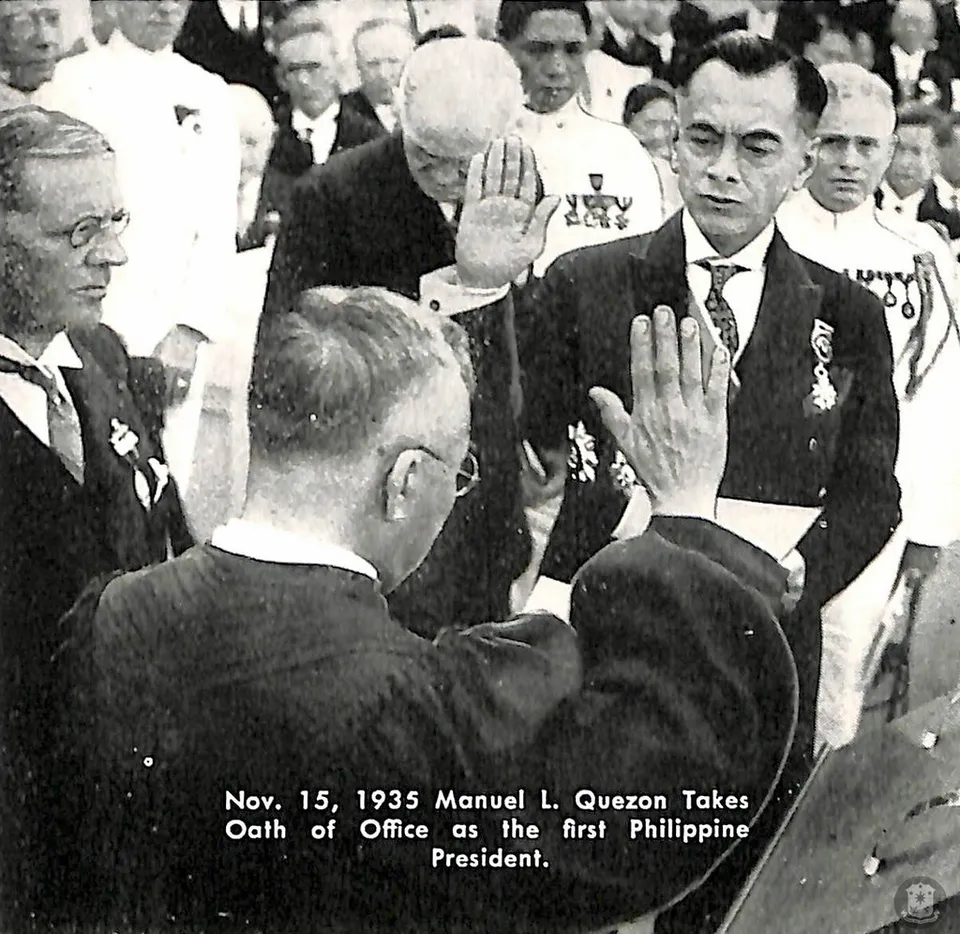
Manuel Quezon taking the oath as president of the Commonwealth, 15 November 1935

Presidential Museum and Library · Public domain · Source

Having taken the Philippines after the Spanish–American War and crushed resistance in the Philippine–American War, the United States promised eventual independence in the Jones Act of 1916. Amid the Depression, American interests eager to shut out cheap Philippine farm goods and migrants also played a part, and the Tydings–McDuffie Act of 1934 set independence after a ten-year transition. On 15 November 1935 Quezon was inaugurated in Manila as president of the Commonwealth. After the Japanese occupation (1942–1945) the Philippines became independent, as promised, on 4 July 1946.

The map in 1935

OpenFreeMap © OpenMapTiles © OpenStreetMap contributors

States and rulers at the time
American Philippines
United States · ruling power — President Franklin D. Roosevelt
Philippines · independence
Places
Manila

People

  • Manuel L. Quezon1878 – 1944

    leader · Philippine statesman who negotiated independence with the United States and became the first president of the Commonwealth of the Philippines in 1935

Before and after

Themes that include this event

  • National Movements in Asia and Africa1915 – 1948

    From the Hussein–McMahon correspondence to the founding of Israel — three decades in which India, West Asia, Southeast Asia and Africa, swept up in the tide of self-determination after the First World War, pressed toward independence and modernization