The Jacquerie and Wat Tyler’s Rebellion
Also called: Peasants’ Revolt, Jacquerie
When lords tightened their grip on the peasants after the Black Death and heavy war taxes were levied, the Jacquerie broke out in France (1358) and Wat Tyler’s Rebellion in England (1381).
Unknown author · Public domain · Source
With labour scarce after the Black Death, peasants’ wages and conditions improved, but the lords tried to freeze wages and restore labour services. In France, after the king was captured at Poitiers in 1356, noble plundering and taxes combined, and in May 1358 peasants of the Beauvaisis north of Paris attacked castles (Jacquerie comes from “Jacques”, a scornful name for a peasant). The nobles crushed the rising within a month.
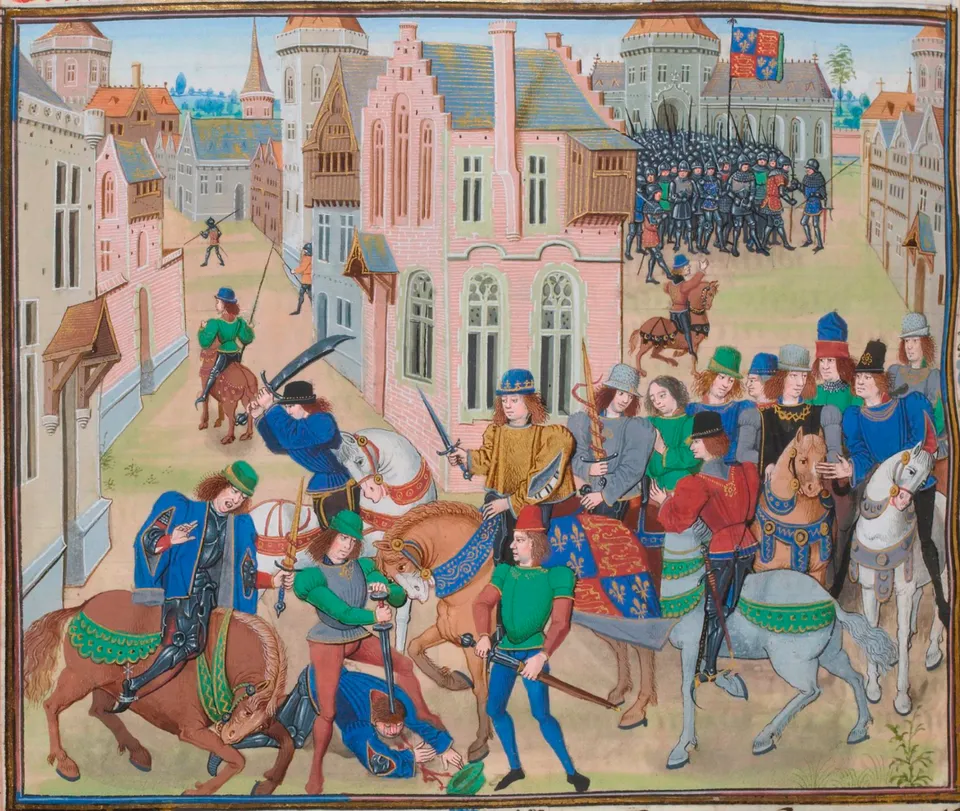
In England a poll tax was raised to pay for the Hundred Years’ War, and in June 1381 peasants led by Wat Tyler entered London. The preacher John Ball asked, “When Adam delved and Eve span, who was then the gentleman?” The fourteen-year-old Richard II promised to free the serfs, but after Tyler was killed during negotiations he withdrew his promises and put down the revolt.
The revolts failed, but the lords could no longer work their serfs as before, and in England serfdom had all but vanished by the 15th century, as independent farmers (yeomen) multiplied. At this time Goryeo was suffering raids by Japanese pirates.