The Twelve Labours on the Metopes of the Temple of Zeus at Olympia
Also called: Olympia metopes, Metopes of Heracles
Over the front and rear porches of the temple of Zeus built at Olympia around 470–456 BC, twelve metopes showed the twelve labours of Heracles — thought to be the earliest clear example of the set of “twelve labours”.
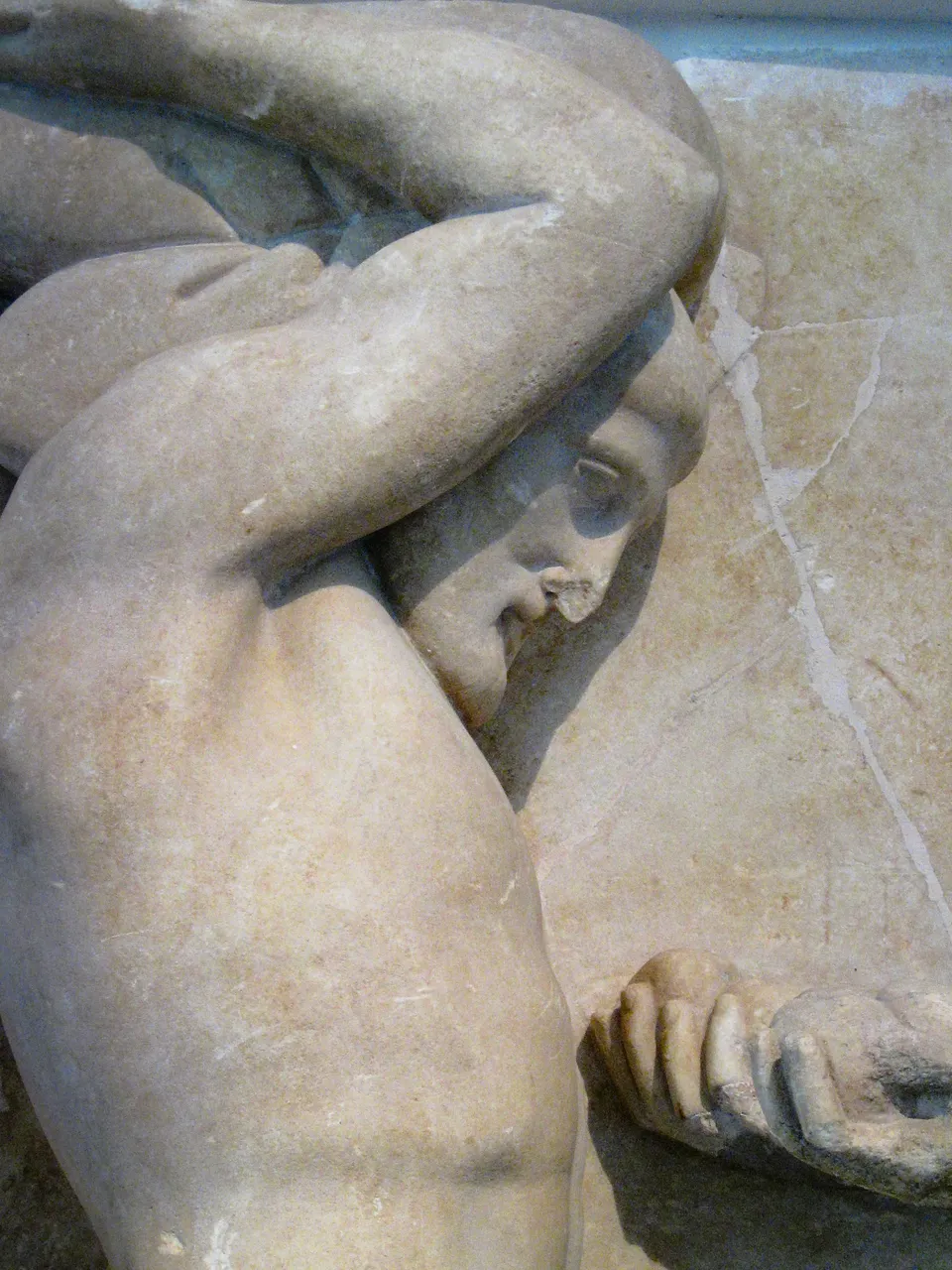
Nicholas Hartmann · CC BY-SA 4.0 · Source
In the sanctuary of Zeus where the Olympic Games were held, the people of Elis had the architect Libon build a great Doric temple, begun around 470 BC and finished around 456 BC. The east pediment showed the chariot race of Pelops and King Oenomaus, the west the battle of the Lapiths and Centaurs; these sculptures are masterpieces of the “Severe Style” that marks the passage from Archaic to Classical art.
Over the inner front and rear porches, six on each side, twelve metopes (square relief panels) showed the labours of Heracles. Surviving scenes include a weary Heracles with his foot on the Nemean lion, and Heracles holding up the sky in place of Atlas while Athena helps from behind. Many scholars think these metopes fixed the number of labours at twelve. Phidias’ gold-and-ivory statue of Zeus was later placed inside the temple.
The temple fell in the 6th century AD, by earthquake (some argue it was deliberately pulled down), and was buried under river silt. In 1829 the French Morea expedition found parts of the metopes and took them to the Louvre, and from 1875 German archaeologists excavated the site systematically. The rest of the metopes are in the Archaeological Museum of Olympia.