Building of the Parthenon
Also called: Parthenon, Temple of Athena Parthenos
In 447 BC Athens under Pericles began a temple to Athena Parthenos (Athena the Virgin) on the Acropolis; it was dedicated in 438 BC and its sculpture finished in 432 BC. The sculptor Phidias directed the work and its sculpture.
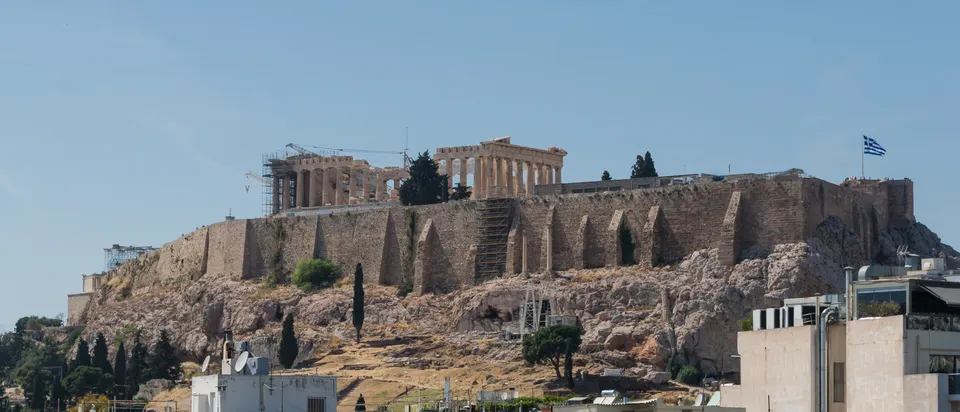
After the Persians burned the Acropolis during the Persian Wars, Athens under Pericles began a new temple in 447 BC, using funds of the Delian League as well, to the resentment of its allies. It was designed by the architects Ictinus and Callicrates, and the sculptor Phidias oversaw the whole project and its sculpture. Built of Pentelic marble, it is a Doric temple surrounded by eight columns on the fronts and seventeen on the sides. In 438 BC Phidias’ gold-and-ivory Athena Parthenos, some 11 m tall, was dedicated, and the pediment sculptures were completed in 432 BC.
The east pediment showed the birth of Athena from the head of Zeus, and the west pediment the contest between Athena and Poseidon for Athens; the frieze running round the walls showed the procession of the Panathenaic festival and the Olympian gods. The statue of Athena is lost and known only from small Roman copies.
The Parthenon later served as a church and a mosque, and on 26 September 1687 a Venetian bombardment ignited the Ottoman gunpowder stored inside, wrecking it. Sculptures removed by Lord Elgin in the early 19th century are now in the British Museum, and Greece has long demanded their return. The Acropolis became a UNESCO World Heritage Site in 1987.