Mycenaean Thebes
Also called: Kadmeia, Kadmeion, Thebes tablets
In the 14th–13th centuries BC a Mycenaean palace stood on the Kadmeia hill at Thebes in Boeotia. It burned at the end of the 13th century BC, and nearly 250 Linear B tablets found in the 1990s show that Thebes was a major centre of the Mycenaean world.
Zde · CC BY-SA 4.0 · Source
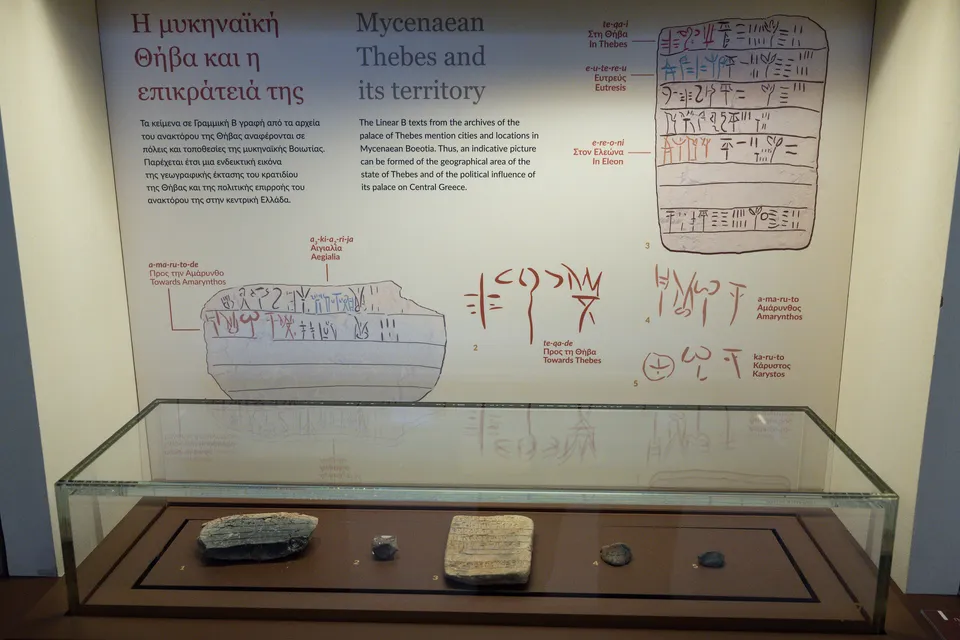
Beneath modern Thiva, on the hill called the Kadmeia, stood a Mycenaean palace (the Kadmeion). Lying under the town centre, it cannot be dug all at once and has been excavated piece by piece as new buildings go up. In the 1960s lapis lazuli cylinder seals from the Near East were found, showing ties with the East. Excavations in Pelopidou Street in 1993–1995 yielded nearly 250 Linear B tablets — some five per cent of all Mycenaean tablets — recording offerings to the gods and places in Boeotia and Euboea under Theban control.
The palace was destroyed by fire, shortly after about 1225 BC according to the excavators, around 1200 BC according to the museum. In Greek myth Thebes was founded by Cadmus and ruled by Oedipus, and was sacked by the sons of the Seven (the Epigoni) before the Trojan War; some link this legend to the fact that the Catalogue of Ships in the Iliad names only “Lower Thebes” (Hypothebai). The finds are in the Archaeological Museum of Thebes.