Politics4 July 1972

July 4 South–North Joint Statement

For the first time since division, the two Koreas agreed on three principles of unification — independence, peace and national unity — announced simultaneously in Seoul and Pyongyang.
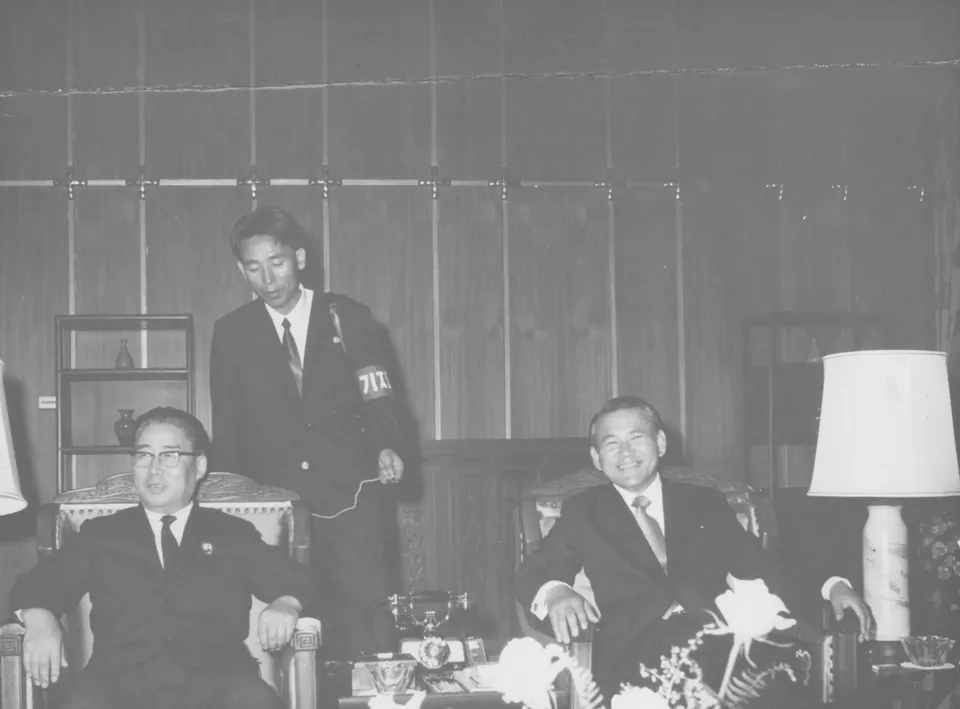
Co-chairmen Lee Hu-rak and Pak Song-chol of the South-North Coordinating Committee set up by the joint statement, Seoul, June 1973

경향신문사 · Public domain · Source

As the Cold War eased with the US–China rapprochement, North–South Red Cross talks began in 1971. After secret contacts, a joint statement was issued simultaneously in Seoul and Pyongyang on 4 July 1972.

It set three principles: unification independently of outside powers, by peaceful means, and through great national unity transcending differences of ideology and system; and it created a South–North Coordinating Committee. Both sides, however, used it to strengthen their own dictatorships — the Yushin constitution in the South and the Socialist Constitution in the North.

The map in 1972

OpenFreeMap © OpenMapTiles © OpenStreetMap contributors

States and rulers at the time
South Korea — President Park Chung-hee

People

  • Park Chung-hee1917 – 1979

    related figure · 5th–9th President (1963–1979). Led the May 16 coup, the five-year economic plans and the Yushin system; killed in the October 26 incident

  • Kim Il Sung1912 – 1994

    related figure · Leader of North Korea (1948–1994): chairman of the Provisional People’s Committee, then premier and president. Purged rivals after the Korean War and built one-man rule

Before and after

Later
1972 October Yushin

Themes that include this event

  • Changing Unification Policies1948 – 2018

    From “march north” to the Panmunjom Declaration — inter-Korean relations from confrontation to dialogue, through joint statements and agreements to summits (up to 2018)