Italian Invasion of Ethiopia
Also called: Second Italo-Ethiopian War, Abyssinia Crisis
Mussolini’s Italy invaded and annexed Ethiopia, an independent African state. The League of Nations’ sanctions ended in failure.
Bettmann Archive · Public domain · Source
Italy wanted to avenge its defeat by Ethiopia at Adwa in 1896 and to enlarge its colonial empire. Using a border clash at Walwal in December 1934 as a pretext, it invaded from Eritrea and Somaliland on 3 October 1935 without a declaration of war. With aircraft, tanks and even poison gas banned by international treaty, Italian forces took the capital, Addis Ababa, on 5 May 1936 and proclaimed annexation on the 9th.
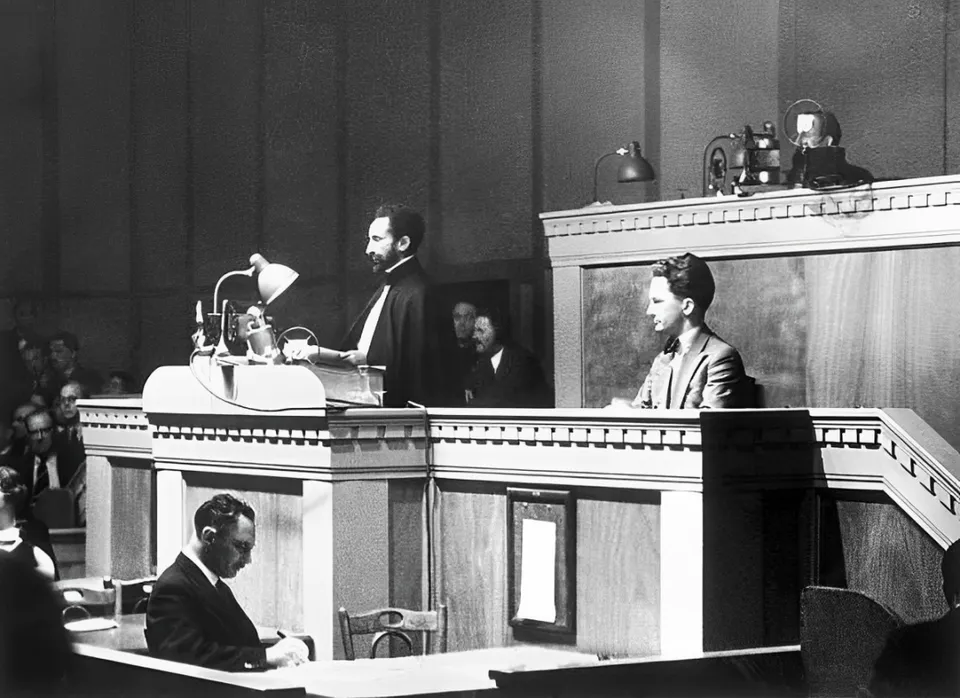
The League of Nations branded Italy the aggressor and imposed economic sanctions, but oil was left out and the Suez Canal stayed open, so they had no effect. Emperor Haile Selassie appealed for collective security before the League Assembly in Geneva in June 1936, yet sanctions were lifted in July. The League’s impotence was laid bare, and an isolated Italy drew closer to Germany. Ethiopia was liberated in 1941 by British forces and Ethiopian resistance fighters.