Indus Valley Civilization
Also called: Harappan civilization, Indus civilization
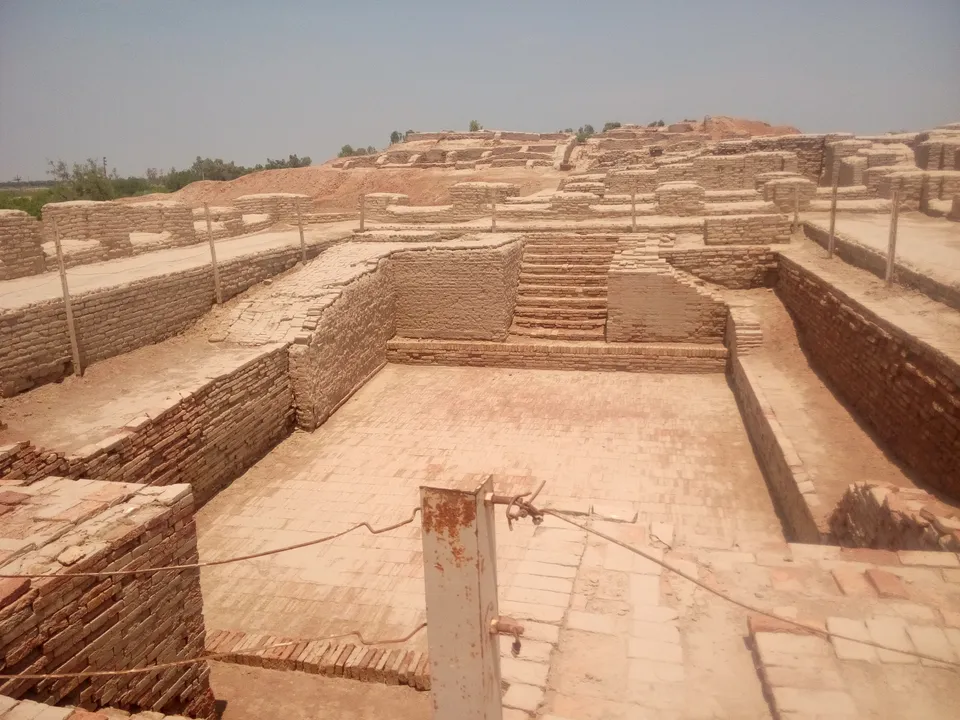
Planned cities such as Harappa and Mohenjo-daro rose along the Indus, with brick houses, drains and a great public bath, but their script still cannot be read.
Aakashaliraza · CC BY-SA 4.0 · Source
Around 2500 BC a Bronze Age civilization flourished along the Indus and its tributaries. It became known to the world when Harappa and Mohenjo-daro were excavated in the 1920s. The cities were divided into a citadel and a lower town, with streets laid out on a grid. Houses were built of standard-sized baked bricks, each with drains running into the main street’s sewer, and there was a public Great Bath and large granaries.
Seals carved with animals bear a pictographic script that has not been deciphered. Weights and measures were uniform over a wide area, and the cities traded with Mesopotamia by sea. Since no grand palaces or royal tombs are clearly identified, little is known of how they were governed.
The cities declined from about 1900 BC. Climate change, shifting rivers and overuse of land are among the suggested causes. Their fall was once blamed on invading Aryans, but most scholars now think the decline came before the Aryans arrived.