Aryan Migration and the Vedic Age
Also called: Vedas, Rigveda, Varna, Caste system, Brahmanism, Indo-Aryan migration
Aryans from Central Asia entered the Punjab on the upper Indus and spread into the Ganges valley. They composed the Rigveda and created the social order of the varnas.
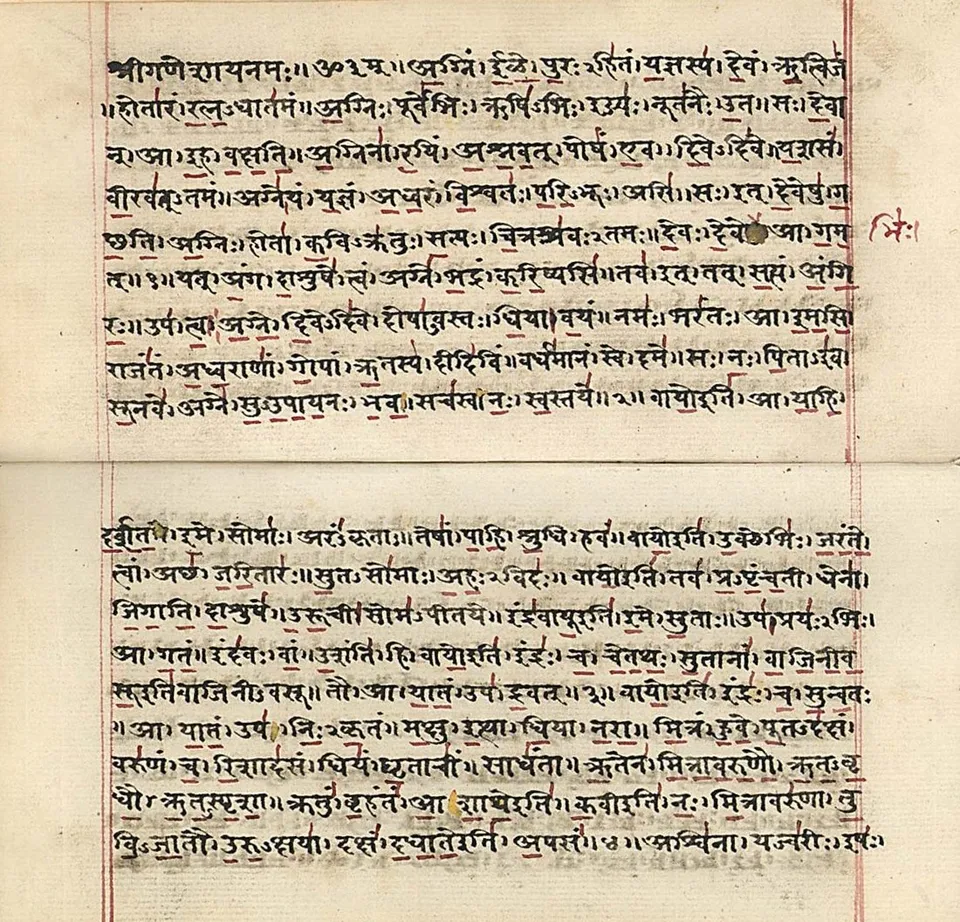
Unknown author · Public domain · Source
Around 1500 BC the Aryans, Indo-European-speaking pastoralists, crossed the Hindu Kush and settled in the Punjab on the upper Indus. They gathered hymns to the gods of nature into the Rigveda. From about 1000 BC, using iron tools, they moved east into the Ganges valley, took up settled farming and founded many small kingdoms.
In the process a varna order hardened: Brahmins who performed sacrifices, Kshatriyas who ruled and fought, Vaishyas who farmed and traded, and Shudras who served them. The varnas later divided into countless jati by occupation and descent, which the Portuguese called castes.
Brahmanism took root, with the Vedas as scripture and Brahmins conducting elaborate rituals. As Brahmin authority and ritual grew ever more elaborate, the philosophy of the Upanishads and new religions emerged around the 6th century BC. The scale and manner of the Aryan migration are still debated.