Honnōji Incident
Also called: Honnō-ji Incident, Honnoji no hen
Akechi Mitsuhide, a senior vassal of Oda Nobunaga, rebelled and attacked Nobunaga at the Honnō-ji in Kyoto. Nobunaga set the temple on fire and took his own life; his heir Nobutada also died, at the Nijō Shingosho.
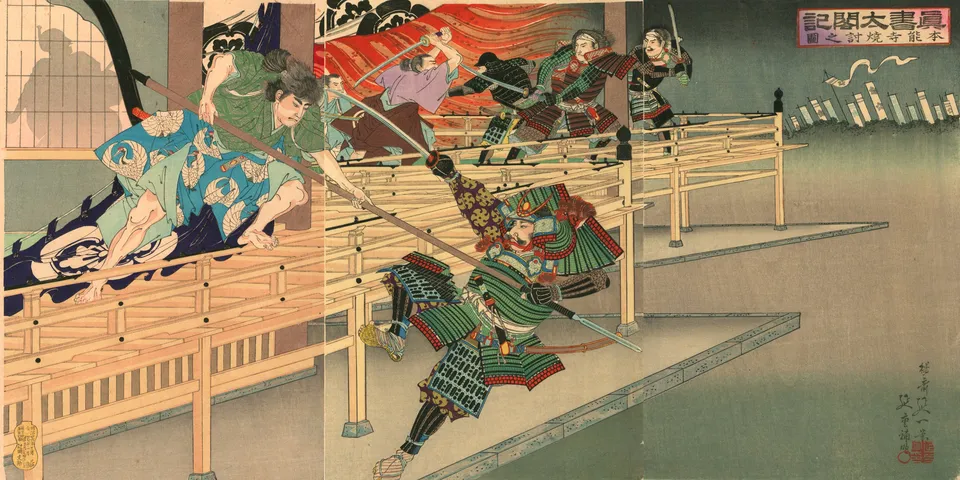
Nobukazu Yōsai · Public domain · Source
In 1582, after destroying the Takeda, Nobunaga stopped at the Honnō-ji in Kyoto with only a small escort on his way to support Hashiba (Toyotomi) Hideyoshi against the Mōri in the Chūgoku region. Akechi Mitsuhide, who had left Tanba with reinforcements, turned his army around and at dawn on 21 June surrounded the temple with more than 10,000 men.
Nobunaga fought back and took his own life in the flames; his heir Nobutada, lodging at the nearby Myōkaku-ji, moved to the Nijō Shingosho and also died by his own hand after resisting. Mitsuhide’s motive remains unknown: grudge, ambition, a plot behind him by the court or the deposed shogun Yoshiaki, and a quarrel over Shikoku policy have all been proposed. Mitsuhide seized Azuchi Castle but was defeated by Hideyoshi at Yamazaki eleven days later.