French Constitution of 1791
Also called: Constitution of 1791, Legislative Assembly
France’s first written constitution set up a constitutional monarchy; the king kept a veto, and the vote went only to tax-paying men.
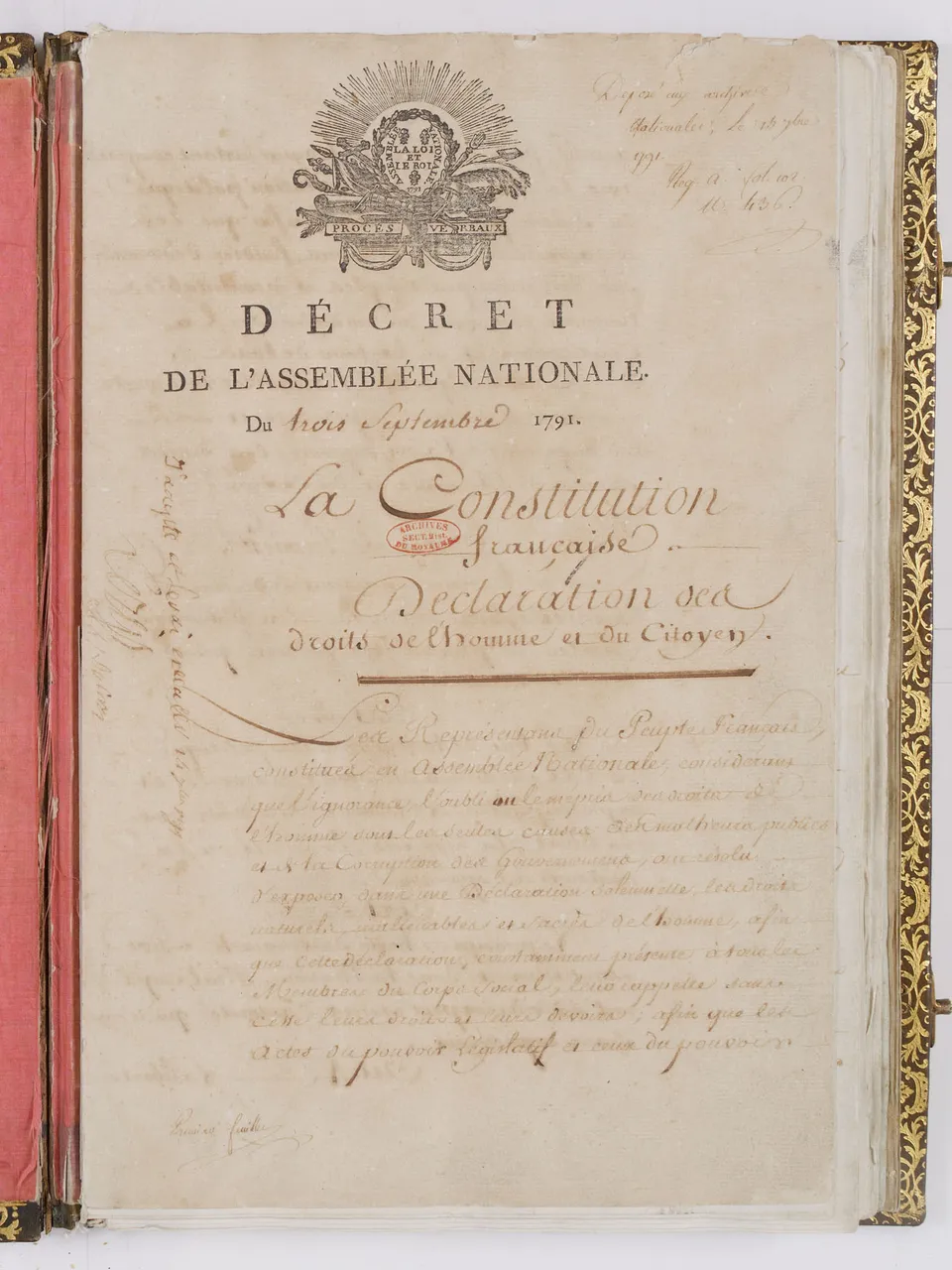
Public domain · Source
After nearly two years of debate the National Constituent Assembly adopted the constitution on 3 September 1791, and Louis XVI swore to accept it on 14 September. Opening with the Declaration of the Rights of Man, it placed sovereignty in the nation but kept the king as “King of the French” with a suspensive veto that could delay laws. Legislative power went to a single-chamber Legislative Assembly.
Only men aged 25 or over who paid a set amount of tax were “active citizens” with the vote, and the electors who chose deputies needed still more property. It also enshrined the 83 departments into which the country had been redrawn in 1790. The Legislative Assembly opened on 1 October, but the constitution lost force within a year when the monarchy fell in August 1792.