Culture15th – 16th century
Buncheong Ware
Also called: Buncheong, Punch’ong ware
Grey stoneware coated with white slip and glazed. It grew out of late Goryeo inlaid celadon and flourished in the 15th century, prized for its free, unpretentious style.
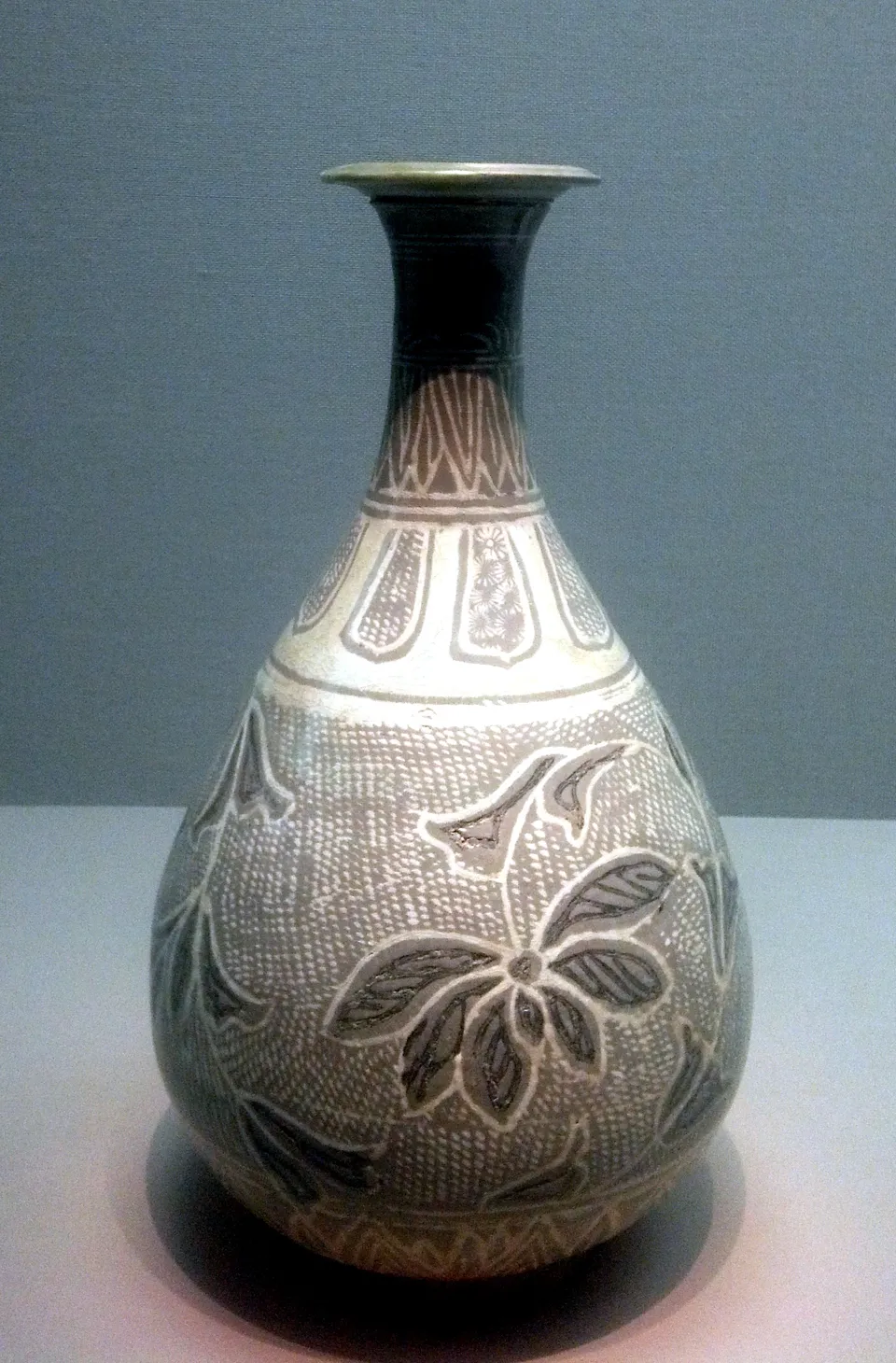
Eggmoon · CC BY-SA 3.0 · Source
It appeared as late-Goryeo inlaid celadon declined and was widely used in early Joseon, in the 15th century. Its hallmark is a grey body dressed with white slip; the name abbreviates “grey-blue ware dressed with slip”. Decoration was varied: inlay, stamping, sgraffito (scraping slip away), brushed slip, dipping in slip and painting in iron.
Free designs and a rustic charm made it an everyday ware for ordinary people as well. It faded in the 16th century as white porcelain spread.