Cultural heritage8000 BC – 19009 events
Changes in Korean Ceramics
From comb-pattern pottery to blue-and-white porcelain — earthenware, Goryeo plain and inlaid celadon, buncheong, white porcelain and blue-and-white
From comb-pattern pottery to blue-and-white porcelain — earthenware, Goryeo plain and inlaid celadon, buncheong, white porcelain and blue-and-white
| Ware | Period | Features |
|---|---|---|
| Comb-pattern pottery | Neolithic | Pointed base; storage and cooking; beginning of farming |
| Plain pottery (Misong-ri type, etc.) | Bronze Age | Undecorated; Misong-ri type marks Gojoseon’s sphere |
| Silla pottery; jar with figurines | Three Kingdoms, 5th–6th c. | Hard grey-blue stoneware; pedestal dishes; clay figurines |
| Horse-and-rider vessels | Silla, 6th c. (Geumnyeongchong) | Rider-shaped ewers; Silla horse gear |
| Plain celadon (melon-shaped bottle, etc.) | Goryeo, 11th–early 12th c. | Song influence; kingfisher colour; figural shapes |
| Inlaid celadon (cranes and clouds maebyeong, etc.) | Goryeo, mid-12th c. on | Carved designs filled with white and red clay — Goryeo’s own |
| Buncheong ware | Late Goryeo – 15th c. Joseon | Grey body dressed in white slip; stamped, sgraffito, brushed |
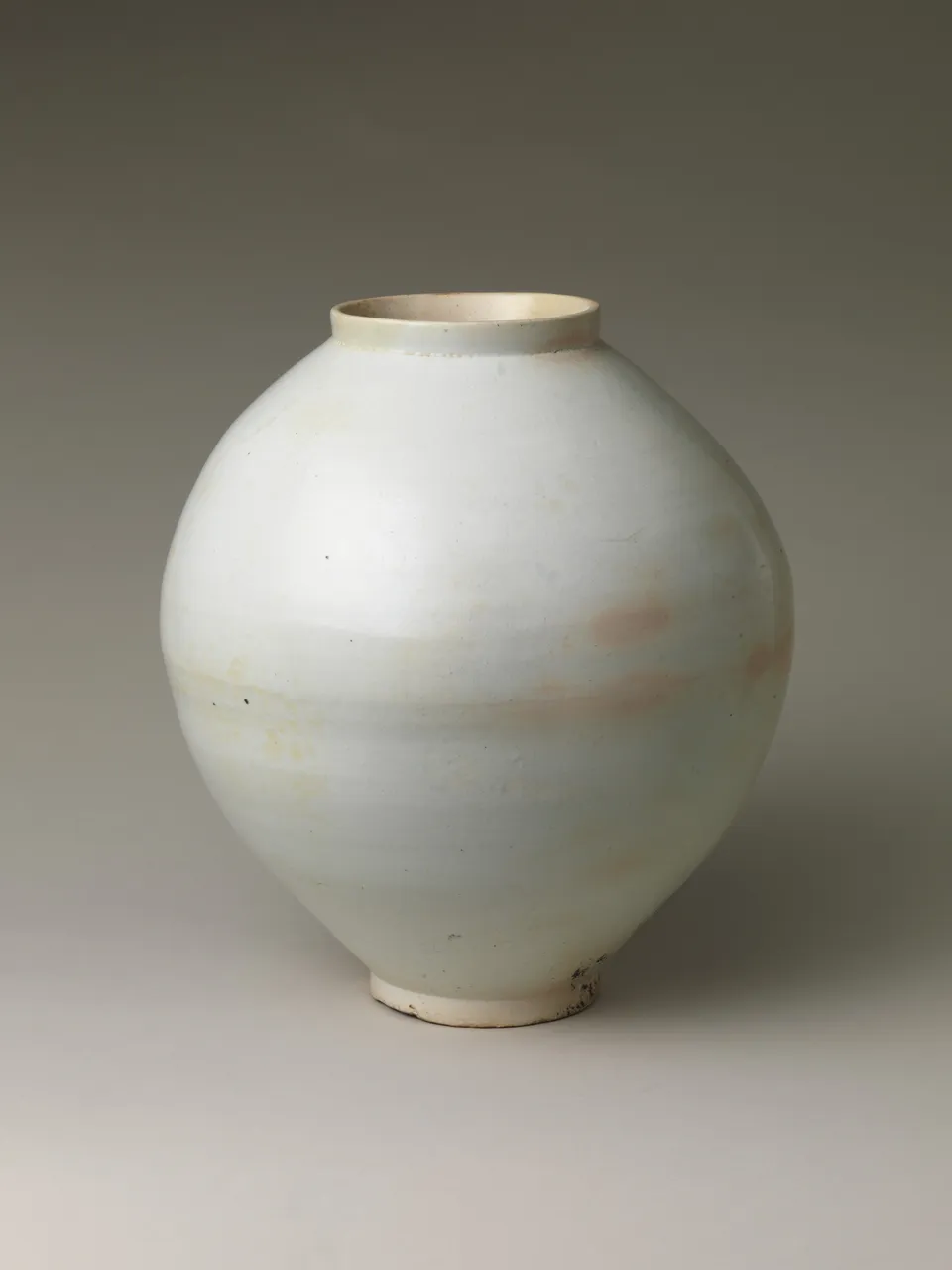
| White porcelain (plain; moon jars) | Joseon, 15th–16th c. on | Scholars’ frugal taste; Gwangju official kilns; iron-painted in 17th c. |
| Blue-and-white porcelain | Joseon, from 15th c.; popular in 18th | Cobalt pigment; spread to stationery and tableware |
From about 8000 BCE people used polished stone tools and pottery, began farming and settled in pit houses along rivers and coasts.
Bronze came into use around 2000–1500 BCE. Rice farming began, private property and classes emerged, and chieftains came to rule.
Hard grey-blue stoneware fired at high temperatures — tall pedestal dishes, long-necked jars, and sometimes small clay figurines (towu) of people and animals.
A pair of Silla pottery vessels in the shape of mounted riders, found in the Geumnyeongchong tomb in Gyeongju — pouring vessels that show Silla horse gear and dress.
Influenced by Song celadon, Goryeo potters made clear blue-green plain celadon in the 11th century, reaching a peak in the early 12th century praised as “kingfisher colour”.
Goryeo fired pure jade-green celadon in the 11th century and by the mid-12th century invented inlaid celadon, filling carved designs with white and red clay.
Grey stoneware coated with white slip and glazed. It grew out of late Goryeo inlaid celadon and flourished in the 15th century, prized for its free, unpretentious style.
Pure white porcelain of white clay fired at high temperatures. Suited to the frugal, restrained taste of the scholar-officials, it became the core of Joseon ceramics from the 16th century.
White porcelain painted with blue cobalt before firing. In the 15th century the costly imported pigment was reserved mostly for the court; from the 18th century it spread widely.
Seventeenth king of Goryeo, who faced the revolts of Yi Ja-gyeom and Myocheong and commissioned the Samguk sagi