Zhu Xi’s Synthesis of Neo-Confucianism
Also called: Zhu Xi school, Learning of Principle, Cheng–Zhu school
Zhu Xi of the Southern Song drew together the work of Northern Song thinkers into Neo-Confucianism (the Zhu Xi school), built on the theory of principle and material force and the doctrine that human nature is principle, and published the Collected Commentaries on the Four Books. It became the examination standard under the Yuan and Ming and, reaching Korea in late Goryeo, the ruling ideology of Joseon.
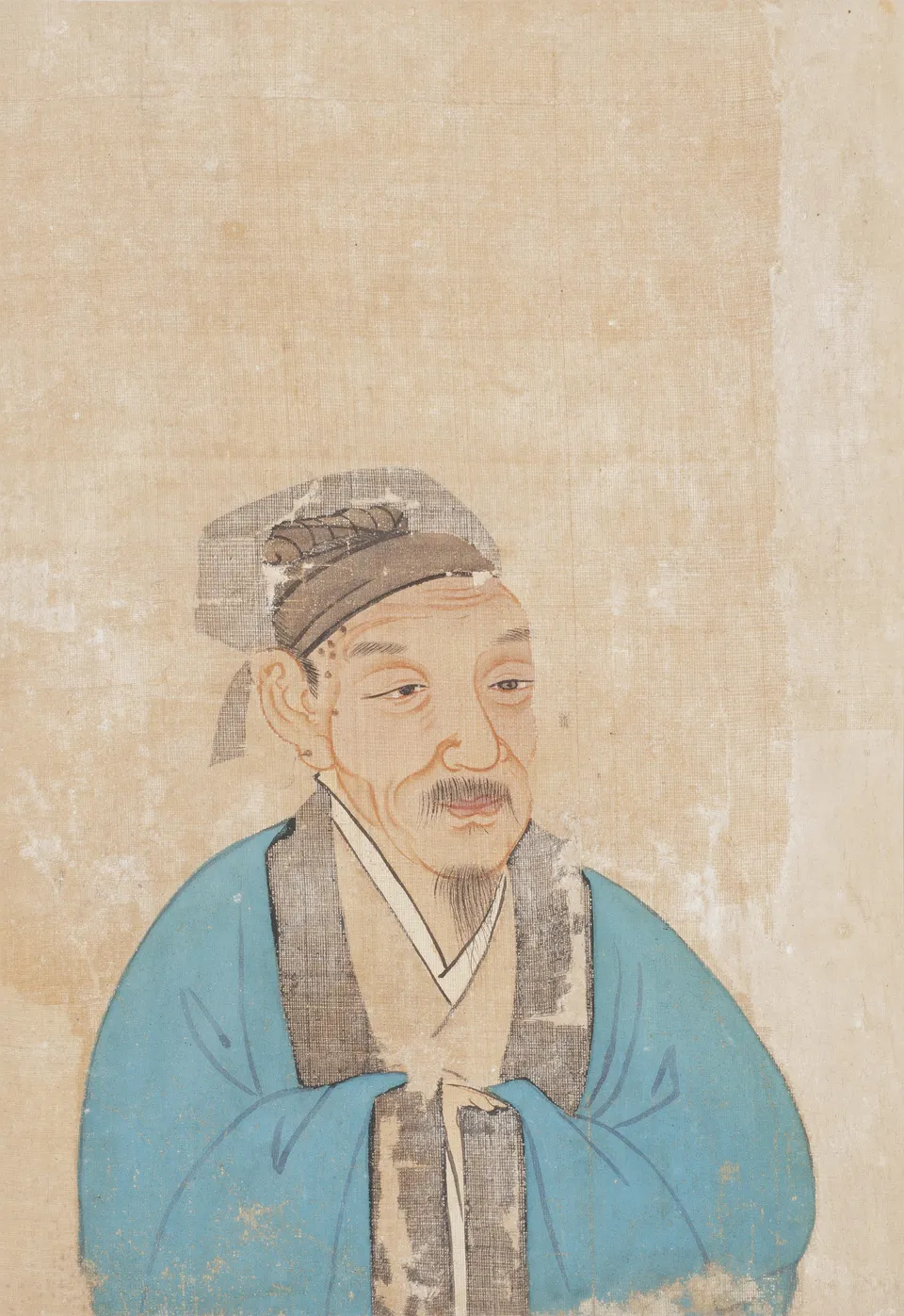
Unknown Chinese artist · Public domain · Source
Song Confucians sought a new Confucianism that could explain the cosmos and human nature in answer to Buddhist and Daoist philosophy. Building on Zhou Dunyi, Zhang Zai and the Cheng brothers, Zhu Xi taught that all things are made of li (principle) and qi (material force), that human nature is principle, and that knowledge is reached by investigating the principle of things to the end. He raised the Great Learning, the Doctrine of the Mean, the Analects and Mencius as the Four Books and published his Collected Commentaries on them in 1190, and he revived the White Deer Grotto Academy as a model of academy education.
His debate with Lu Jiuyuan, who held that the mind is principle, and his stress on moral duty and the distinction between civilised and barbarian also mark the school. Condemned in his lifetime as “false learning”, his teaching became East Asian orthodoxy when the Yuan made it the standard for the examinations in 1313 and the Ming compiled the Great Compendia of the Four Books and of Neo-Confucianism.
An Hyang brought Neo-Confucianism to Goryeo from the Yuan under King Chungnyeol, and the new scholar-officials who embraced it founded Joseon. Joseon made it the ideology of state, spreading Zhu Xi’s Family Rituals and building private academies.