Jingkang Incident and the Southern Song
Also called: Jingkang Disaster, Treaty of Shaoxing, Southern Song
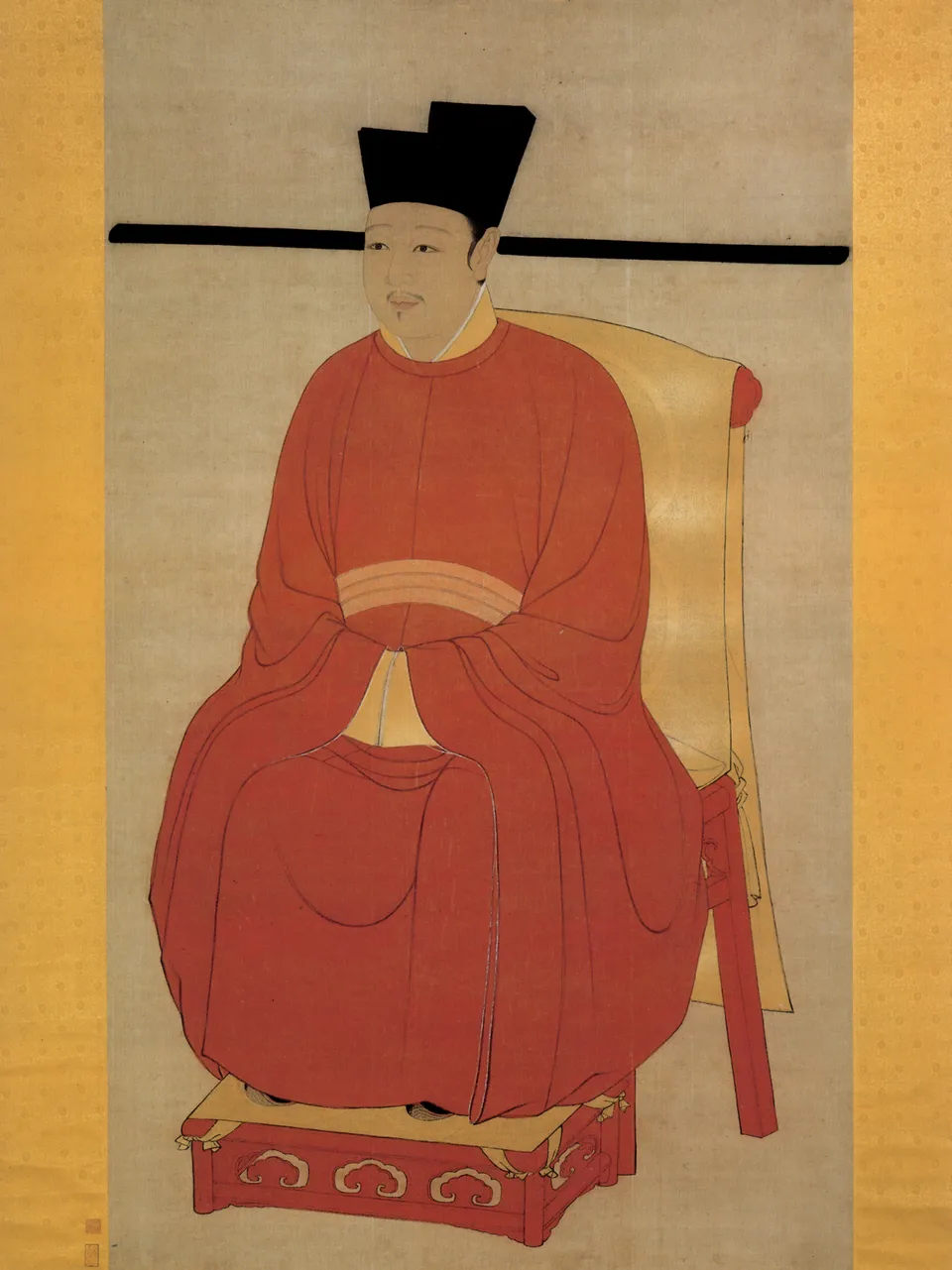
The Jin took Kaifeng and in 1127 carried off the Song emperors Huizong and Qinzong and their court to the north (the Jingkang Incident). Qinzong’s brother Gaozong took the throne in the south to continue the dynasty as the Southern Song, which made peace with Jin in 1141 with the Huai River as the border.
Unknown author · Public domain · Source
Having attacked Liao jointly with Jin under the Alliance Conducted at Sea, the Song failed to deliver the promised goods and courted Jin’s enemies, provoking a Jin invasion. Huizong abdicated to his son Qinzong, but Jin forces took the capital Kaifeng in January 1127 (late 1126 by the lunar calendar) and that spring carried off both emperors and some 3,000 members of the imperial family and court. Named after the reign era, the Jingkang Incident ended the Northern Song.
Qinzong’s younger brother Zhao Gou (Gaozong) took the throne at Yingtian (the Southern Capital) in 1127 and, chased south by Jin armies, eventually settled at Lin’an (Hangzhou) — the Southern Song. Generals such as Yue Fei campaigned to win back the north, but chief minister Qin Hui pushed for peace and concluded the Shaoxing treaty in 1141: the Huai River became the border, and the Song accepted the status of a subject and paid annual silver and silk. Yue Fei was executed the following year.
Though it lost the north, the Southern Song prospered on the wealth of the lower Yangtze, and cultures such as Zhu Xi’s Neo-Confucianism flourished. Goryeo, while acknowledging Jin as suzerain, kept up contact with the Southern Song through merchants.