Xinhai Revolution and the Founding of the Republic of China
Also called: Revolution of 1911, Wuchang Uprising, Chinese Revolution of 1911
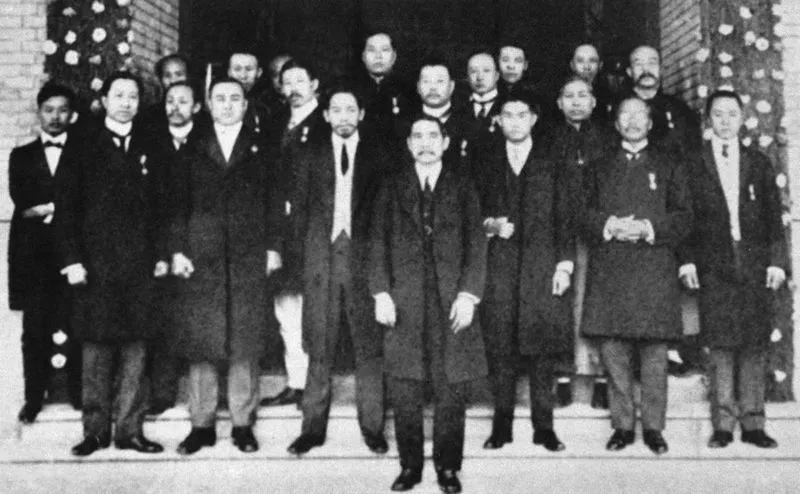
Beginning with the Wuchang Uprising, revolution spread until the Republic of China was founded and the Qing fell. Over two thousand years of imperial rule ended, and China’s first republic was born.
Unknown author · Public domain · Source
As the Qing declined, Sun Yat-sen founded the Revive China Society in Hawaii (1894) and in 1905 united several revolutionary groups in Tokyo as the Tongmenghui. Under the Three Principles of the People — nationalism, democracy and the people’s livelihood — it called for overthrowing the Manchu dynasty and founding a republic. In 1911, when the Qing government nationalized private railways to pledge them as security for foreign loans, protests swelled in Sichuan and elsewhere.
On 10 October 1911 the New Army at Wuchang rose in revolt, and within two months most provinces declared independence from the Qing. On 1 January 1912 the Republic of China was proclaimed in Nanjing with Sun Yat-sen as provisional president. The Qing entrusted Yuan Shikai with crushing the revolt, but Yuan negotiated with the revolutionaries, secured the abdication of the Xuantong Emperor (Puyi) on 12 February, and took over the provisional presidency in return.
The Xinhai Revolution ended more than two thousand years of imperial rule that began with the Qin. But as Yuan ruled as a dictator and even tried to make himself emperor, the revolution remained unfinished, and after his death China fell into the warlord era. Korean independence activists such as Sin Gyu-sik took part in or were inspired by the revolution, and it influenced the Korean Provisional Government’s later choice of a democratic republic.