Unification of Egypt
Also called: Egyptian civilization, Narmer, Menes
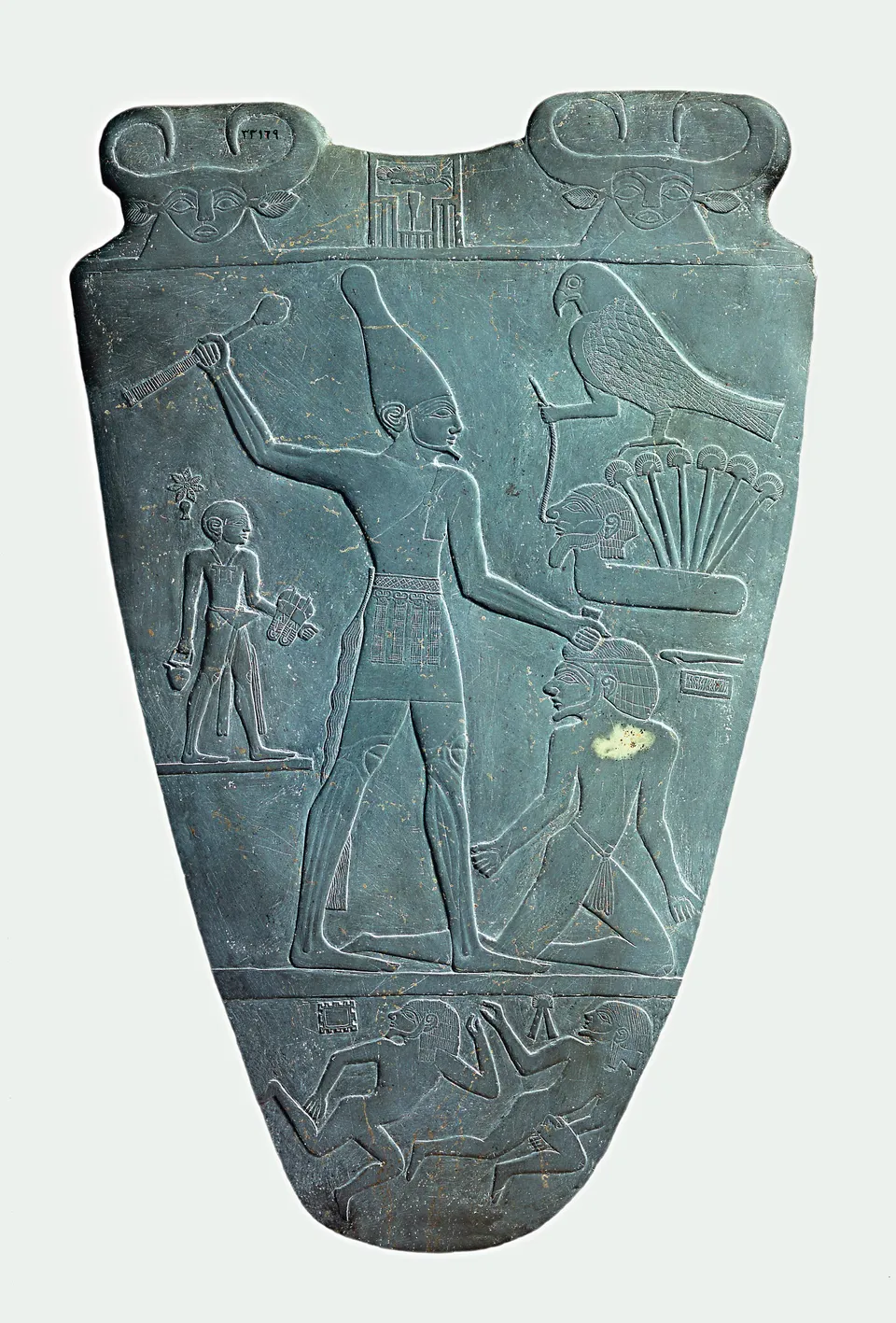
Upper and Lower Egypt along the Nile were joined into a single kingdom, traditionally by Menes, who is usually identified with King Narmer.
Unknown author · Public domain · Source
The Nile flooded regularly each year, laying down fertile silt. Farming along the river, people formed kingdoms in Upper Egypt to the south and in the Delta of Lower Egypt to the north. Around 3100 BC a king of Upper Egypt conquered the north and joined the two lands. Egyptian tradition names the first king Menes, now usually identified with Narmer, whose ceremonial palette shows him wearing both the white crown of Upper Egypt and the red crown of Lower Egypt.
The pharaoh of the united kingdom was a living god, revered as son of the sun god Ra (theocracy). Egyptians wrote hieroglyphs on papyrus, devised a 365-day solar calendar to predict the floods, and developed surveying and geometry to redraw fields after them.
Shielded by deserts and sea, Egypt suffered few invasions and its dynasties lasted long. Believing the soul would return, Egyptians mummified their dead (later burying them with the Book of the Dead). The Great Pyramid of Giza rose in the Old Kingdom. Dates for unification range from about 3200 to 3000 BC.