The Trojan Horse
Also called: Wooden horse, Trojan Horse of Troy
A legend handed down over the centuries.
A Greek myth and legend told in the Odyssey and in Book 2 of Virgil’s Aeneid. The Greeks hid soldiers inside a huge wooden horse and pretended to sail away; the Trojans hauled the horse into their city, and at night the soldiers came out and opened the gates, and Troy fell.
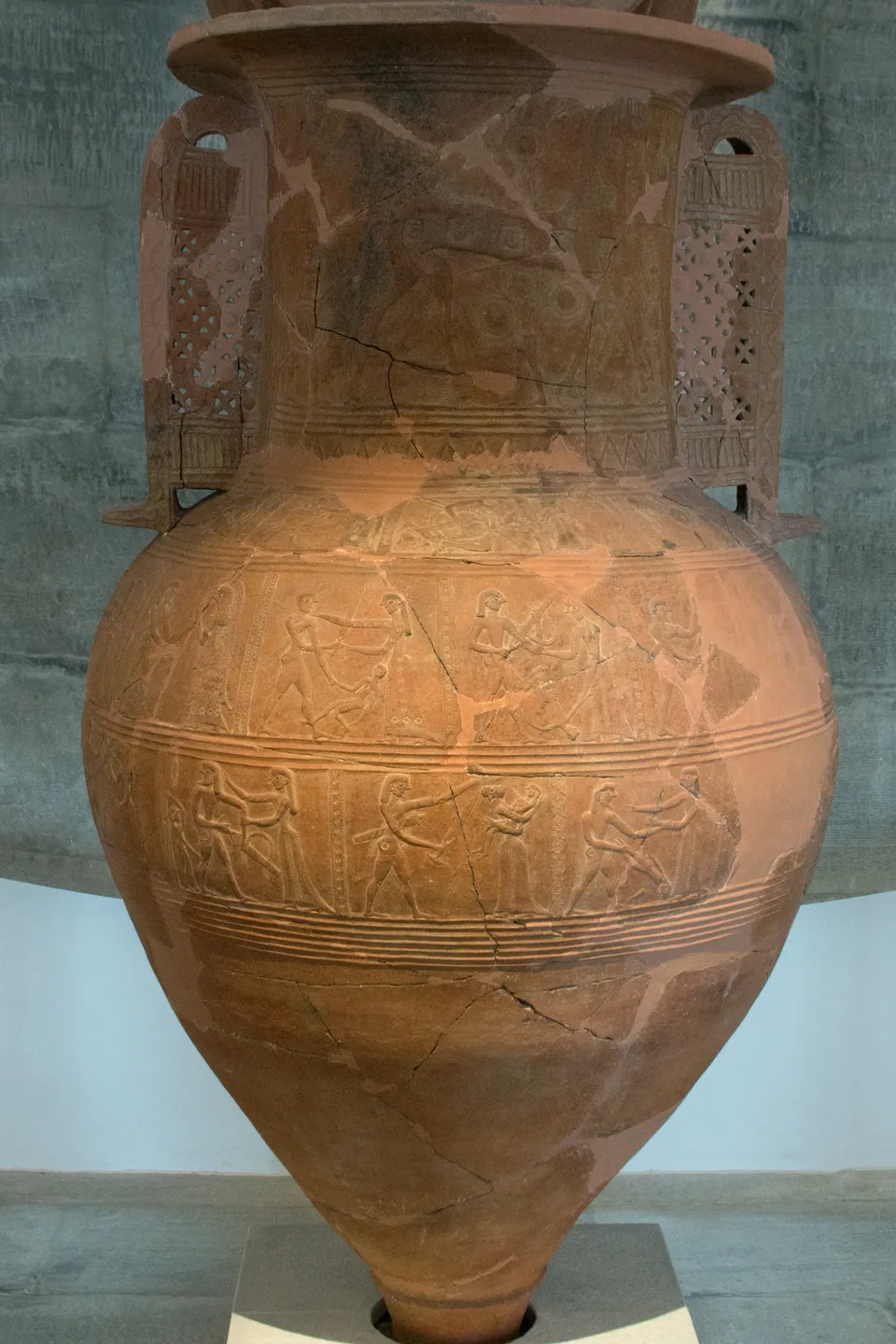
Zde · CC BY-SA 4.0 · Source
This Greek myth and legend is told in Homer’s Odyssey (in recollections in Books 4, 8 and 11), in the lost epics Little Iliad and Sack of Ilion, and in Book 2 of the Roman poet Virgil’s Aeneid. When Troy still held out after Achilles’ death, Epeius, on Odysseus’ plan and with Athena’s help, built a huge hollow wooden horse. Odysseus, Menelaus and other champions hid inside, while the rest of the Greeks burned their camp and pretended to withdraw behind the island of Tenedos.
In the Aeneid the Greek Sinon, captured on purpose, deceived the Trojans by telling them the horse was an offering to Athena and would protect Troy if brought within the walls. The Trojans breached their walls to haul it in and celebrated their victory. At night the soldiers came out of the horse and opened the gates to the returning Greeks; Troy burned and King Priam was killed. “Trojan horse” is now used for any ruse that gets inside by deception, and for a kind of malicious computer program.
The horse is not confirmed by archaeology. The oldest surviving picture of it is on the Mykonos vase of about 670 BC. Some read the horse as a memory of a siege engine or a metaphor for an earthquake (the horse being Poseidon’s symbol), but these are speculation. Here it is placed as a legend attached to the real destruction of Troy VIIa, dated to the year Eratosthenes reckoned for the fall of Troy (1184 BC).