Triple Alliance and Triple Entente
Also called: Triple Alliance, Triple Entente
After Germany, Austria-Hungary and Italy formed the Triple Alliance (1882), Britain, France and Russia drew together step by step into the Triple Entente (1907). The European powers split into two camps.
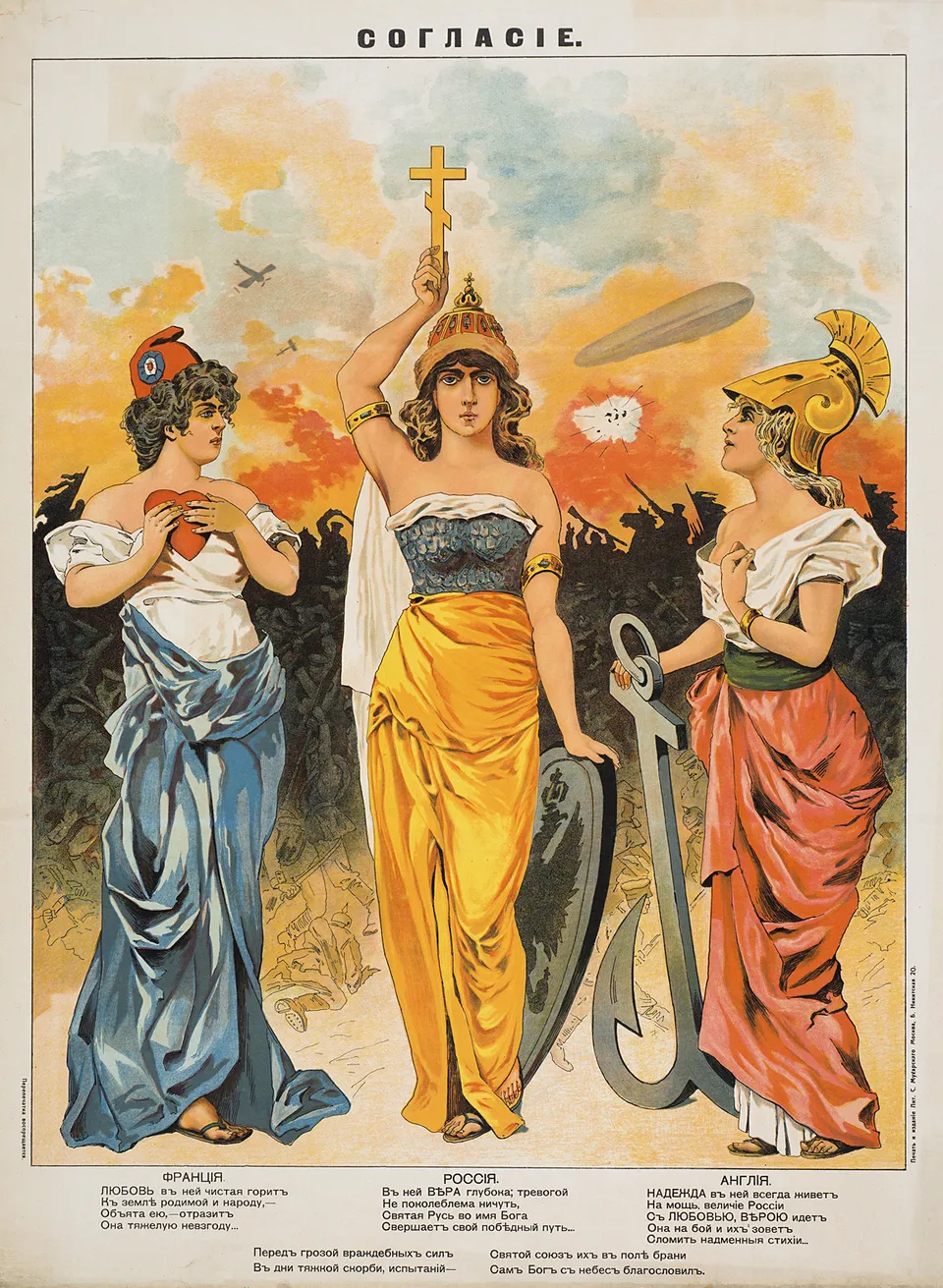
Unknown author · Public domain · Source
After German unification Bismarck built a system of alliances to isolate France. On 20 May 1882 Germany and Austria-Hungary signed the Triple Alliance in Vienna with Italy, angered by France’s seizure of Tunisia (1881). But when Wilhelm II let the Reinsurance Treaty with Russia lapse (1890), Russia allied with France (1894).
As Germany pursued world power through the 3B policy (Berlin–Byzantium–Baghdad) and naval expansion, Britain gave up its "splendid isolation": it made the Anglo-Japanese Alliance (1902), the Entente Cordiale with France (1904), in which each recognized the other’s position in Egypt and Morocco, and the Anglo-Russian Convention (1907), which divided Iran. Thus the Triple Entente was formed. The two camps clashed again and again over Morocco and the Balkans, and this rivalry led to the First World War.