Treaty of Chanyuan
Also called: Chanyuan Treaty
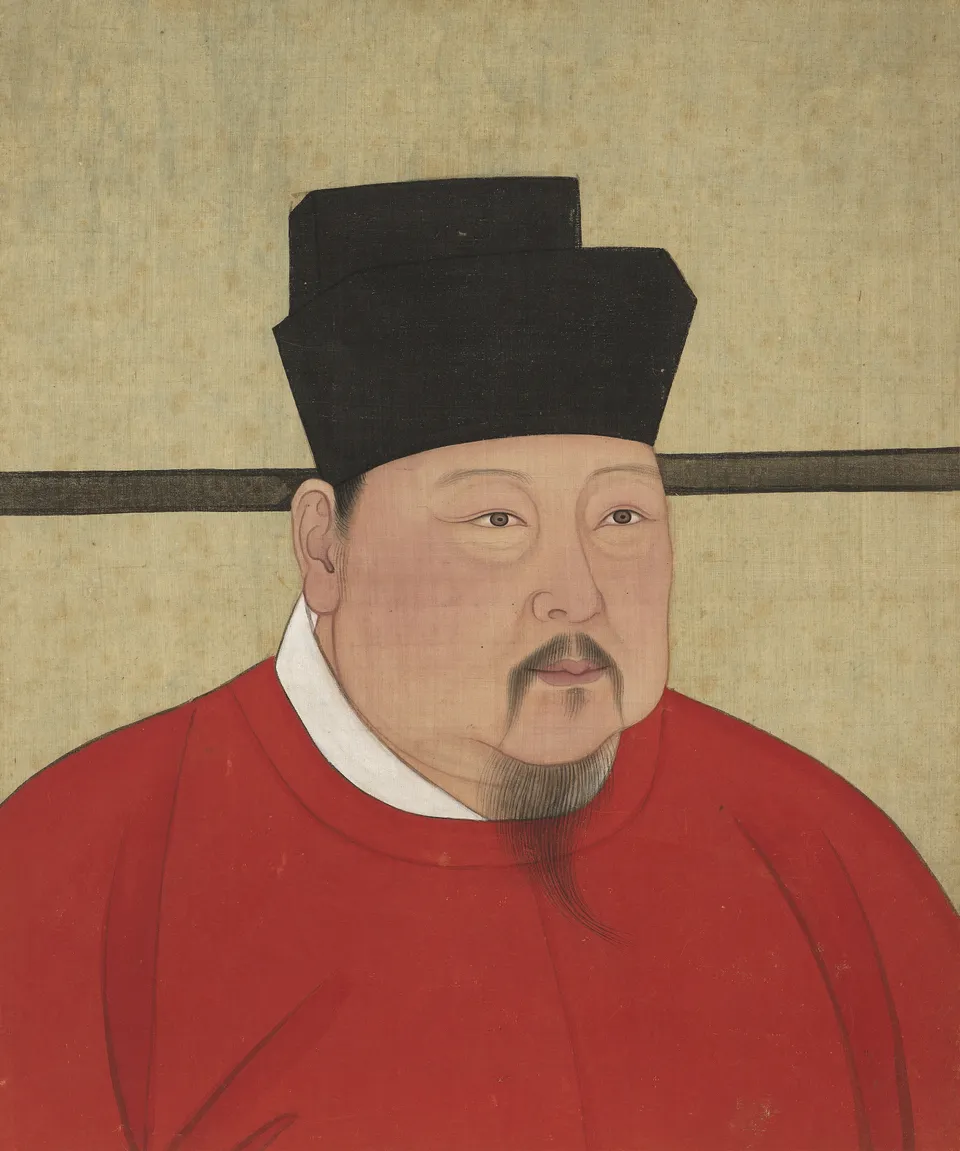
When Emperor Shengzong of Liao led a great Khitan army down to the Yellow River in 1004, Emperor Zhenzong of Song went to Chanzhou and made peace. In return for annual payments of silk and silver from the Song, the two states lived as “brothers” in peace for nearly 120 years.
Unknown author · Public domain · Source
The Song attacked the Khitan in 979 and 986 to recover the Sixteen Prefectures and was badly beaten. The Khitan first moved to neutralise Song’s ally Goryeo, invading in 993 and withdrawing after Seo Hui’s negotiation; in 1004 Shengzong and the Empress Dowager Chengtian led a great army south to Chanzhou (Chanyuan) on the Yellow River. Some ministers urged flight from the capital, but at chief minister Kou Zhun’s urging Zhenzong went to Chanzhou in person to rally the troops.
At the end of that year (January 1005 by the solar calendar) the two sides made peace: the Song would send 200,000 bolts of silk and 100,000 taels of silver each year, the Song emperor would be the elder brother and the Liao emperor the younger, and the border would stay as it was. Under the Treaty of Chanyuan the two states fought no major war until the 1120s; the payments burdened Song finances, but much of the silver flowed back through the border trading markets.
At peace with the Song, Liao turned on Goryeo again in 1010 and 1018, and only after Gang Gam-chan’s victory at Gwiju in 1019 did a balance settle among Song, Liao and Goryeo. Buying peace with money became the Song pattern, repeated later with Western Xia and Jin.