Treaties of Saint-Germain and Trianon
Also called: Treaty of Neuilly, Treaty of Trianon, Treaty of Saint-Germain-en-Laye
The peace treaties the Allies made with Austria (Saint-Germain), Bulgaria (Neuilly) and Hungary (Trianon). The Austro-Hungarian Empire was dissolved and new states arose in Central Europe.
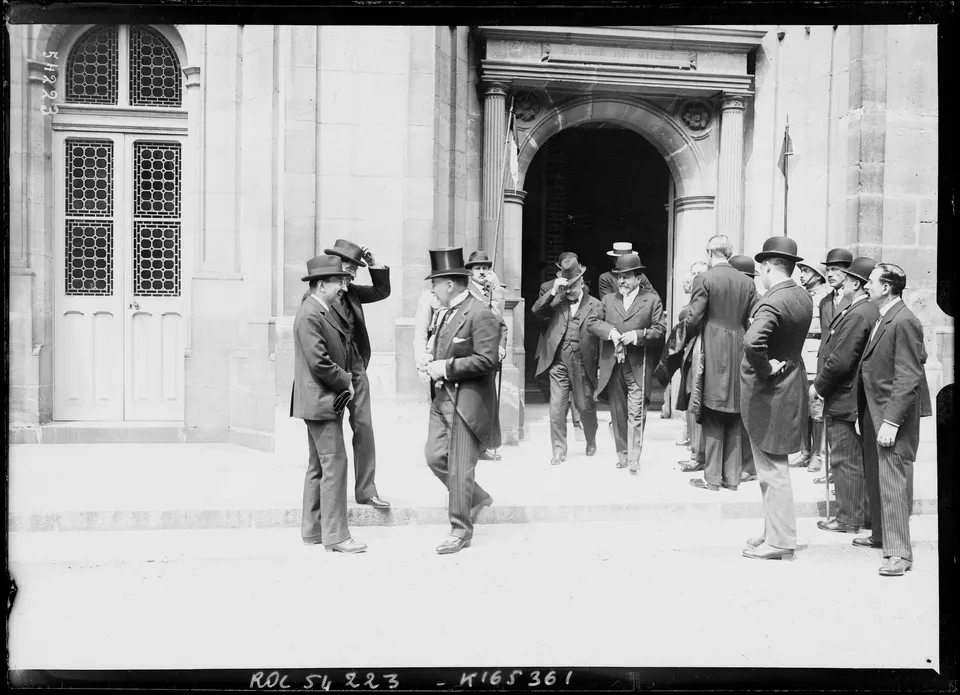
Agence Rol · Public domain · Source
Under the Treaty of Saint-Germain of 10 September 1919, Austria became a small German-speaking republic. It recognized the independence of Czechoslovakia, Poland and the Kingdom of Serbs, Croats and Slovenes (later Yugoslavia), ceded South Tyrol and other lands to Italy, and was forbidden to unite with Germany. By the Treaty of Neuilly in November, Bulgaria lost Western Thrace and its outlet to the Aegean.
By the treaty signed at the Trianon palace in Versailles on 4 June 1920, Hungary gave up more than two-thirds of its former territory to Romania, Czechoslovakia, Yugoslavia and others, leaving millions of Hungarians outside its borders. Because the new frontiers did not match the map of peoples, Central and Eastern Europe were left with minority problems.