Eungjinjeon Hall, Seongbulsa, Hwangju
A late Goryeo hall in the multi-bracket style. Brought in from Yuan, this style went on to the great palace and temple halls of Joseon.
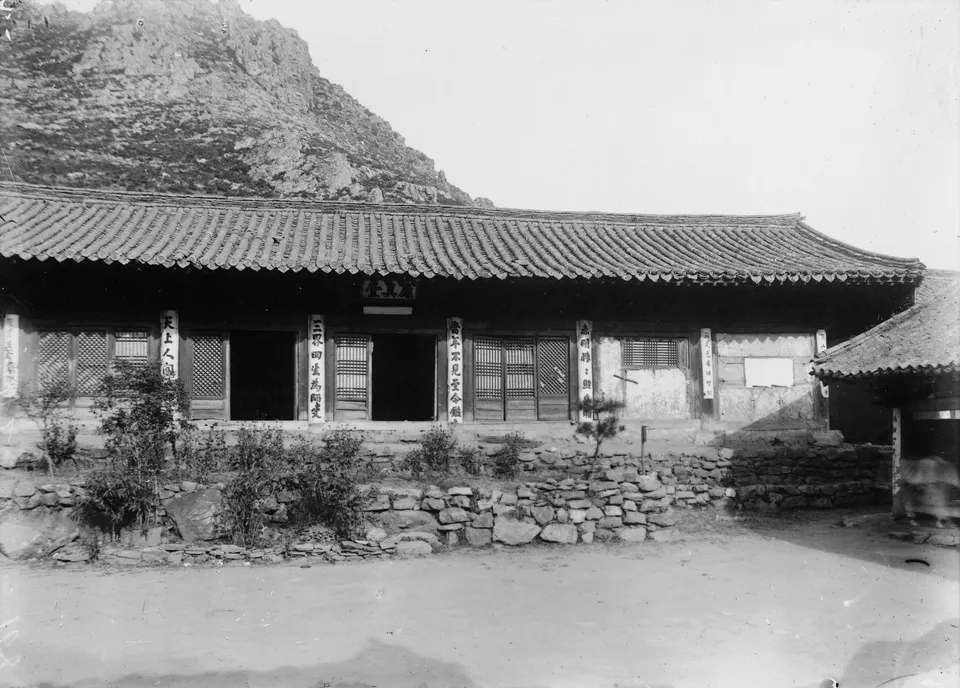
Unknown author · Public domain · Source
This hall, also called Eungjindang, stands at Seongbulsa on Mt. Jeongbang in Hwangju, Hwanghae (now Sariwon, North Hwanghae). It is in the dapo style, with brackets set closely between the columns as well as on top of them.
The dapo style arrived in late Goryeo under Yuan influence. Its many brackets allowed large, ornate roofs, so in Joseon it was used widely for palaces, gates such as Sungnyemun and Geunjeongjeon of Gyeongbokgung, and the great halls of temples. Exam questions often contrast Goryeo’s jusimpo halls (Bongjeongsa, Buseoksa, Sudeoksa) with the dapo hall of Seongbulsa.