Saladin Recaptures Jerusalem
Three months after Hattin Saladin besieged Jerusalem and accepted its surrender; unlike in 1099, the inhabitants were allowed to leave on payment of ransom.
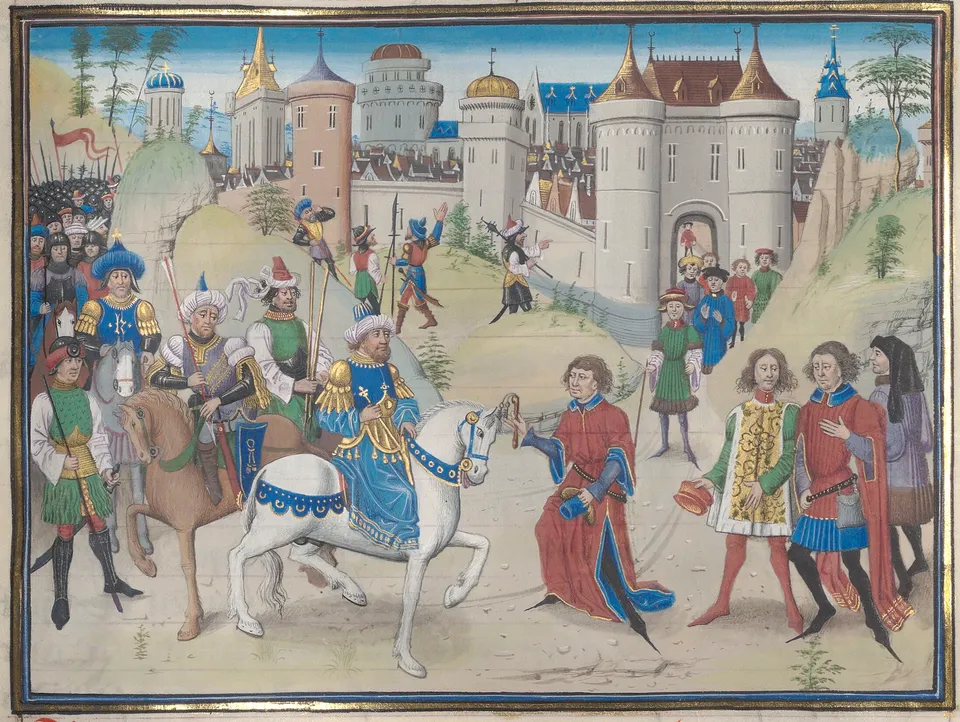
Loyset Liédet · Public domain · Source
With the kingdom’s field army gone after Hattin, Saladin took Acre, Jaffa and other coastal towns and then surrounded Jerusalem on 20 September 1187. There were hardly any knights in the city, and the nobleman Balian of Ibelin armed refugees and townspeople to hold the walls.
When part of the wall was breached, Balian bargained by threatening to destroy the holy places and fight to the last. Saladin agreed to let the inhabitants go for a ransom of ten dinars a man, five a woman and one a child, and entered Jerusalem on 2 October. Many who could not pay were enslaved, though Saladin and his brother al-Adil freed some without payment.
Contrasting with the crusaders’ massacre of 1099, this settlement made Saladin a model of chivalrous generosity even in Europe. The Dome of the Rock and the al-Aqsa Mosque became Muslim shrines once more, and news of Jerusalem’s loss prompted the Third Crusade.