Russian Civil War and War Communism
Also called: War Communism, Reds and Whites
The Bolsheviks’ Red Army fought and defeated the counter-revolutionary Whites and foreign interventionist forces, while the government imposed War Communism — forced grain requisitioning and the nationalization of industry.
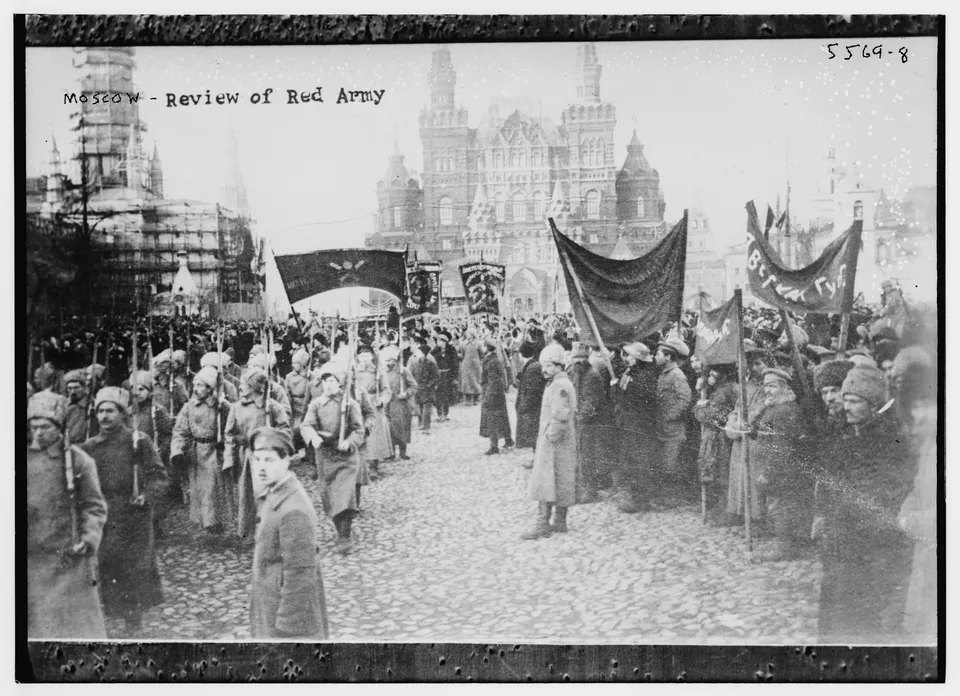
Bain News Service, publisher · Public domain · Source
From spring 1918 the Soviet regime faced White armies led by former tsarist generals, socialists opposed to the Bolsheviks, and nationalities seeking independence. After the revolt of the Czechoslovak Legion, Britain, France, the United States, Japan and others sent troops, Japan keeping the largest force in Siberia for the longest time. In July Nicholas II and his family, held at Yekaterinburg, were executed.
The Red Army built by Trotsky held the central railways and industrial regions and beat the scattered Whites one by one, effectively ending the fighting in European Russia by late 1920, amid the “Red Terror” of the Cheka secret police. Under War Communism the government seized the peasants’ surplus grain by force, nationalized even small workshops and banned private trade.
War and requisitioning wrecked industry, and the famine of 1921–1922 killed millions. When peasant revolts and the mutiny of the Kronstadt sailors broke out, Lenin retreated to the New Economic Policy. Korean armed units in the Russian Far East and Siberia were also drawn into the war, and suffered the Free City Incident of 1921.