Romulus, Remus and the She-Wolf
Also called: Romulus, Remus, Lupercal, She-wolf of Rome, Faustulus
A legend handed down over the centuries.
A Roman founding legend told in Book 1 of Livy’s History of Rome and Plutarch’s Life of Romulus. The twins Romulus and Remus, cast into the Tiber on Amulius’ orders, were suckled by a she-wolf in the Lupercal cave below the Palatine Hill and raised by the shepherd Faustulus.
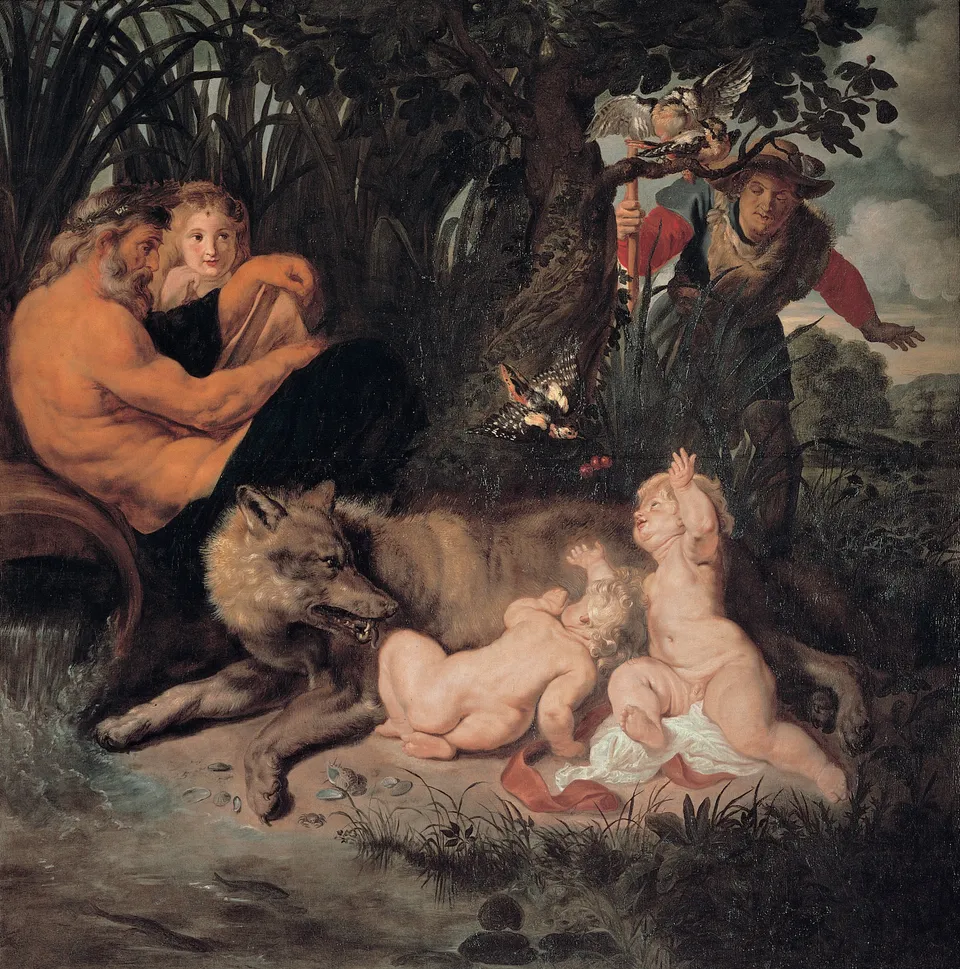
Peter Paul Rubens · Public domain · Source
This Roman founding legend is told in Book 1 of Livy’s History of Rome, Dionysius’ Roman Antiquities and Plutarch’s Life of Romulus, and was already written down by Rome’s first historian, Fabius Pictor (late 3rd century BC). Amulius ordered Rhea Silvia’s twins to be thrown into the Tiber, but the river was in flood and their basket came to rest by a fig tree (the Ficus Ruminalis) below the Palatine Hill. A thirsty she-wolf heard their cries and suckled them in the Lupercal cave, and a woodpecker brought them food. The king’s herdsman Faustulus found them and raised them with his wife Acca Larentia.
Grown up as leaders of the shepherds, the twins learned of their birth, killed Amulius and restored the throne of Alba Longa to their grandfather Numitor. Livy also records the view that the story arose because lupa (“she-wolf”) was also slang for a prostitute, and Acca Larentia had been called one.
The wolf and twins already appear in a statue group set up by the Ogulnius brothers beside the Ficus Ruminalis in 296 BC (Livy, Book 10) and on Roman silver coins of the early 3rd century BC. In 2007 a decorated underground chamber found below the Palatine was claimed as the Lupercal, but many scholars consider it a later nymphaeum. Here the story is placed as a legend attached to the real early settlement on the Palatine, dated to the early 8th century BC, before the traditional founding of Rome in 753 BC.