Nuremberg Laws
Also called: Reich Citizenship Law, Nuremberg Race Laws
Timed to the Nazi Party rally in Nuremberg, Nazi Germany enacted racial laws that stripped Jews of citizenship and banned their marriage to Germans.
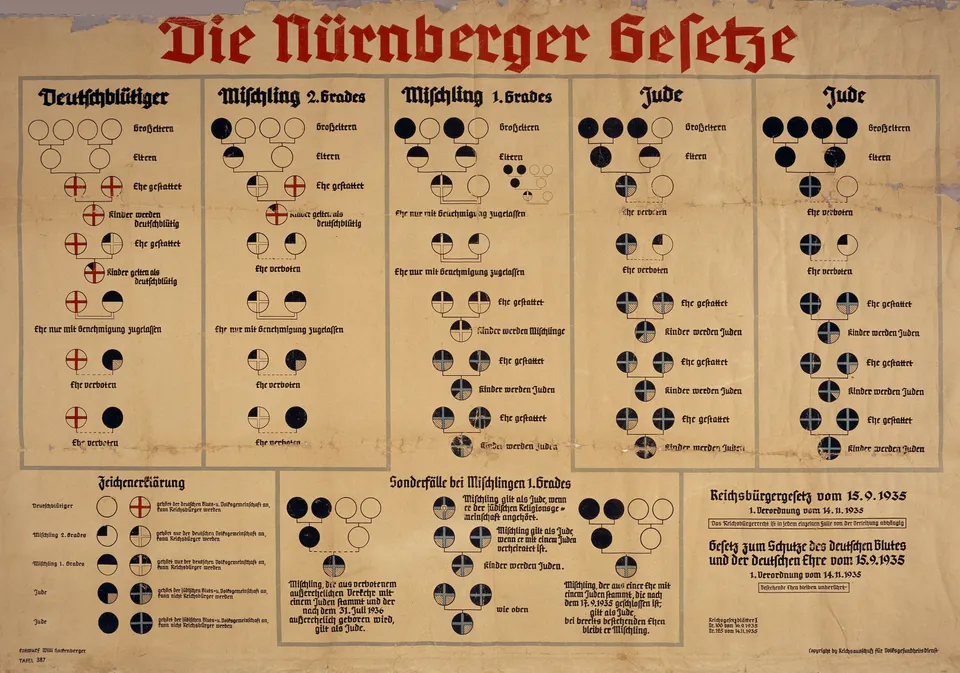
German Government ("Entwurf Willi Hackenberger", "Copyright by Reichsausschuß für Volksgesundheitsdienst", government agency apparently part of the Reichs- und Preußisches Ministerium des Innern) · Public domain · Source
Soon after taking power the Nazis organized a boycott of Jewish shops and drove Jews out of public service. On 15 September 1935 the Reichstag, summoned to the party rally in Nuremberg, passed two laws. The Reich Citizenship Law limited citizenship to those of “German or kindred blood”, reducing Jews to subjects without rights, and the Law for the Protection of German Blood and German Honour banned marriage and extramarital relations between Jews and Germans.
A decree in November defined Jews and “Mischlinge” (persons of mixed descent) by how many of their grandparents were Jewish, and the laws were soon extended to Roma and Sinti and to Black people. Many Jews, losing their livelihoods and property, emigrated. By writing racial discrimination into law, the state laid the groundwork for a persecution that ran through Kristallnacht (1938) to the Holocaust.