Conflict25 June 1950

North Korean Invasion

North Korean forces attacked across the whole 38th parallel, took Seoul in three days and drove south to the Nakdong River.
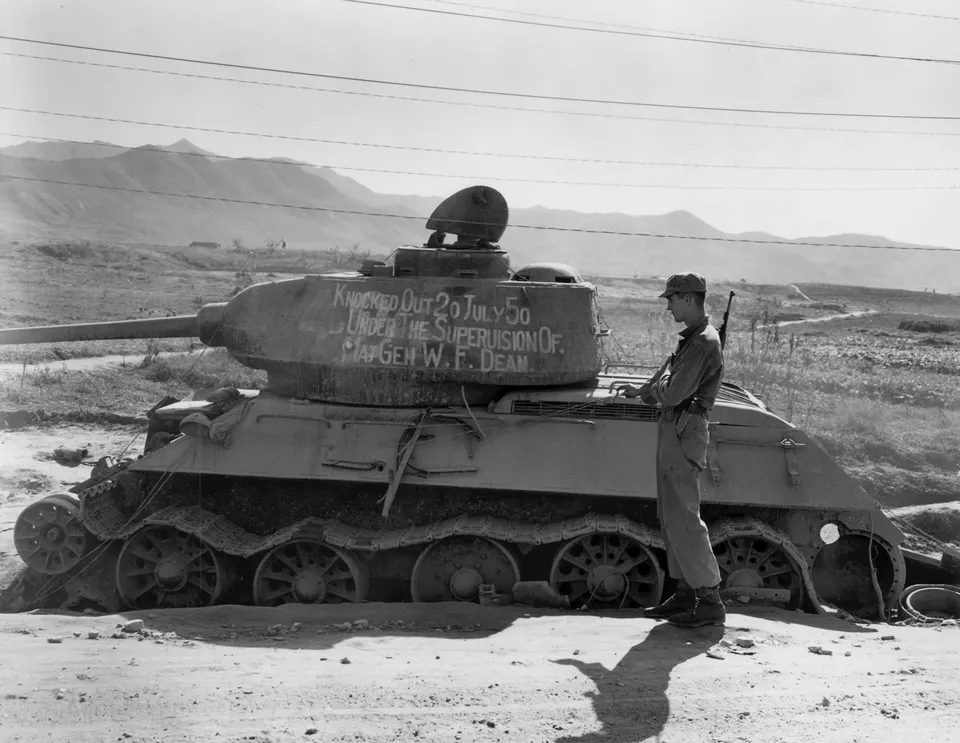
North Korean T-34 tank knocked out in the Battle of Taejon, 20 July 1950

USAMHI · Public domain · Source

In January 1950 the US Acheson Declaration left Korea outside America’s Pacific defence perimeter. With promises of Soviet and Chinese support, North Korea attacked across the 38th parallel before dawn on 25 June and occupied Seoul on 28 June.

The UN Security Council condemned the aggression and called on members to help South Korea; sixteen countries led by the US sent combat units. South Korean and UN forces kept retreating until they held the Nakdong River perimeter in August, and the government made Busan its provisional capital.

The map in 1950

OpenFreeMap © OpenMapTiles © OpenStreetMap contributors

States and rulers at the time
North Korea · invader — Supreme Leader Kim Il Sung
South Korea · invaded — President Syngman Rhee
United States · UN forces — President Harry S. Truman

People

  • Kim Il Sung1912 – 1994

    leader · Leader of North Korea (1948–1994): chairman of the Provisional People’s Committee, then premier and president. Purged rivals after the Korean War and built one-man rule

  • Syngman Rhee1875 – 1965

    related figure · First President of the Provisional Government, who worked through diplomacy in the US; later first President of the Republic of Korea

Before and after

Later
1950 Incheon Landing

Themes that include this event

  • Busan1443 – 1979

    Port of the Japan House and of the 1876 opening — Korea’s gateway to Japan, and wartime capital in the Korean War