Model Parliament
Also called: Parliament of 1295, Origins of the English Parliament
The parliament summoned in 1295 by Edward I of England, which brought together knights of the shires and burgesses of the towns as well as nobles and clergy, became the pattern for later parliaments.
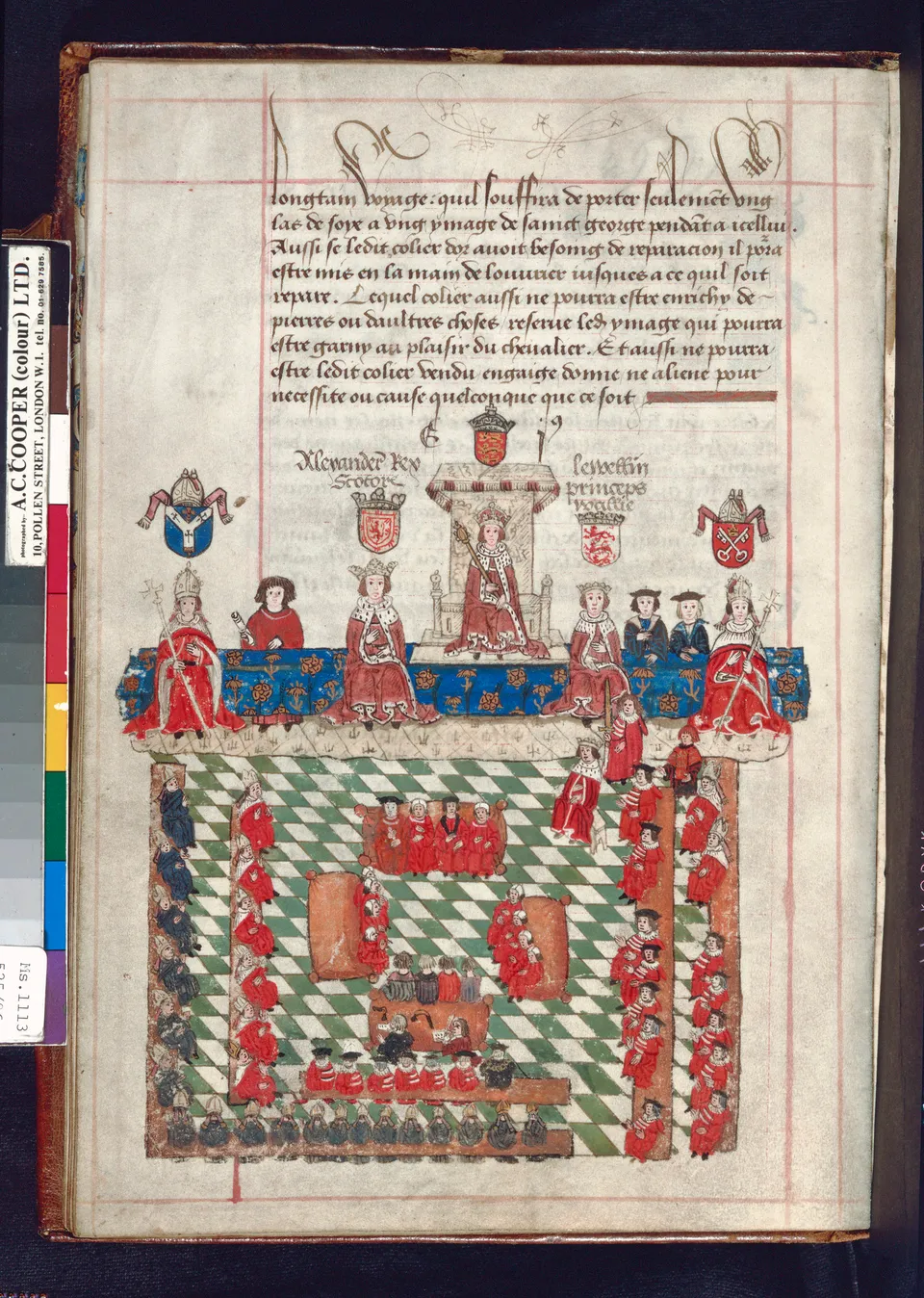
Thomas Wriothesley · Public domain · Source
After Magna Carta (1215) the principle took hold in England that taxes required the consent of the great council. In 1265 Simon de Montfort, rebelling against the king, summoned a parliament of nobles and clergy together with two knights from each shire and two burgesses from each town. Edward I, needing money for wars in Wales, Scotland and France, summoned a parliament of the same make-up in November 1295; it became the model for later parliaments and is known as the Model Parliament.
In the 14th century Parliament divided into the House of Lords, of great churchmen and nobles, and the House of Commons, of knights and burgesses; holding the power to consent to taxation, it checked the crown and came to share in legislation. At this time Goryeo was under Yuan domination, ruled by King Chungnyeol.