Medea
Also called: Medeia
A legend handed down over the centuries.
A Greek myth best known from Euripides’ tragedy Medea (431 BC). Medea, the Colchian princess who followed Jason to Greece, was abandoned in Corinth when Jason sought to marry the king’s daughter; she killed the bride with a poisoned robe, killed her own children and escaped in the chariot of the Sun.
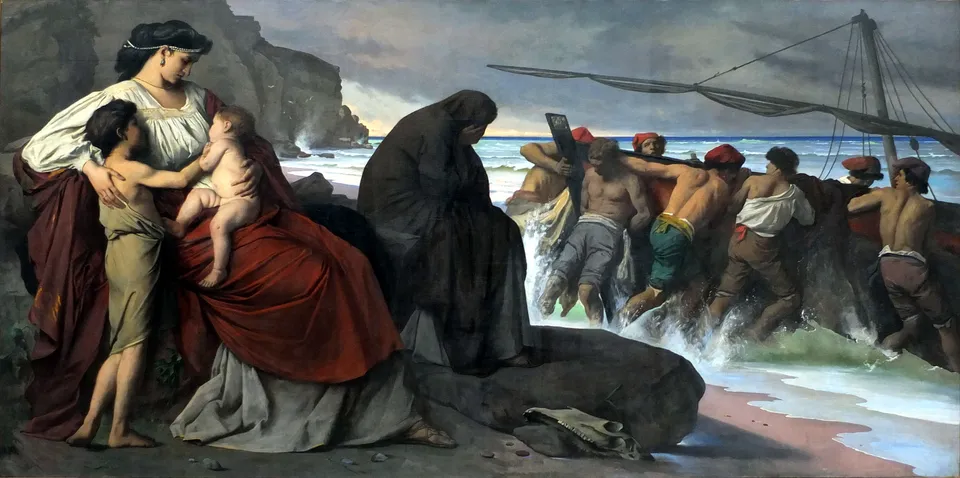
Anselm Feuerbach · Public domain · Source
This Greek myth is best known from Euripides’ tragedy Medea (first performed in 431 BC), and was also treated by Apollonius, Ovid (Metamorphoses, Book 7) and Seneca. Fleeing Colchis, Medea is said to have killed her brother Apsyrtus to delay her pursuing father. In Iolcus she showed the daughters of Pelias how to cut up an old ram and boil it back to life as a lamb, and tricked them into doing the same to their father, who died. For this Jason and Medea were driven out to Corinth.
In Euripides Jason abandons Medea to marry the daughter of Creon, king of Corinth. Medea sends the bride a poisoned robe and crown that kill her and Creon, who tries to save her, and then, to wound Jason most deeply, kills her own two sons and escapes to Athens in the dragon chariot of her grandfather, the sun god Helios. In older versions the children were killed by the Corinthians, and some scholars think Euripides was the first to make their mother the killer.
In Athens Medea is said to have married King Aegeus and, when his son Theseus arrived, tried to poison him, then fled when she was found out. Medea, a drama of the rage of an abandoned foreign woman, is still often staged today.