Lucretia and the End of the Monarchy
Also called: Lucretia, Rape of Lucretia, Tarquinius Superbus, Lucius Junius Brutus
A legend handed down over the centuries.
A Roman legend told in Book 1 of Livy and Book 2 of Ovid’s Fasti. When the noblewoman Lucretia, violated by Sextus, son of the last king Tarquinius Superbus, took her own life after making her kinsmen swear revenge, Brutus roused the citizens and drove out the king.
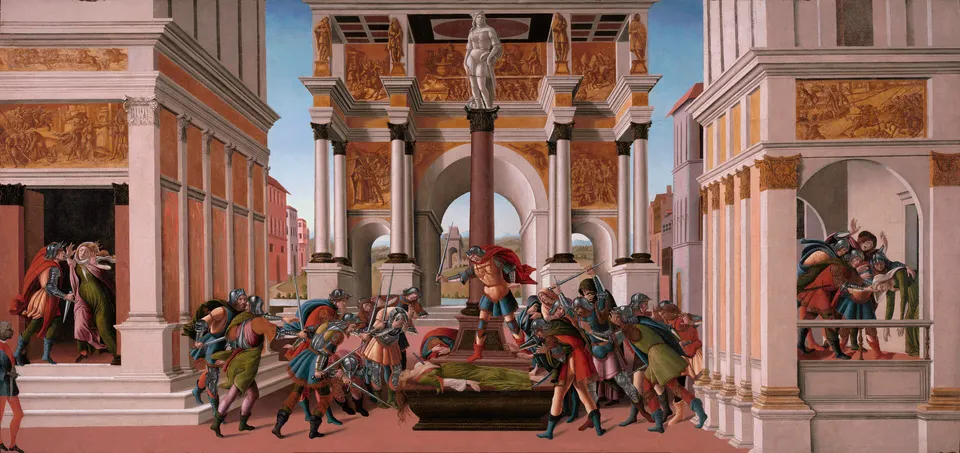
Sandro Botticelli · Public domain · Source
This Roman legend is told in Livy’s History of Rome (Book 1, chapters 57–60), Dionysius and Book 2 of Ovid’s Fasti. While Tarquinius Superbus (“the Proud”), Rome’s seventh and last king, was besieging Ardea, the young men in camp wagered over whose wife was the most virtuous. Riding home unannounced at night, they found the princes’ wives feasting — all but Lucretia, wife of Collatinus, who sat spinning wool with her maids.
Inflamed by her, the king’s son Sextus Tarquinius returned some days later to her house at Collatia and raped her at sword-point. Lucretia summoned her father, her husband and Lucius Junius Brutus, told them what had happened, made them swear vengeance and stabbed herself. Holding up the dagger, Brutus roused the citizens and drove the royal family out of Rome; Brutus and Collatinus became the first consuls.
That Rome expelled its kings and became a republic in the late 6th century BC is accepted, but Lucretia’s story resembles Greek tales of the fall of tyrants and is thought to have been shaped later. For Romans she was a symbol of chastity and liberty; Shakespeare’s poem The Rape of Lucrece (1594) and paintings by Botticelli and Titian take up her story.