King Micheon Expels the Lelang Commandery
King Micheon of Goguryeo drove out the Lelang Commandery, winning back the old Gojoseon heartland on the Taedong River.
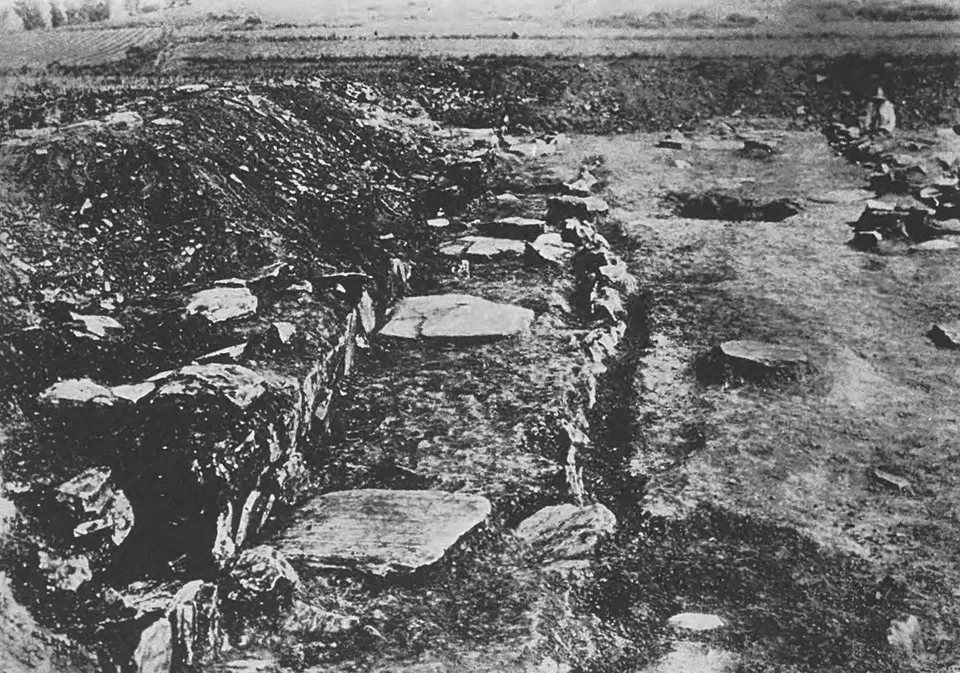
朝鮮古蹟研究会 · Public domain · Source
Lelang was one of the four commanderies Emperor Wu of Han set up after destroying Gojoseon in 108 BCE, centred on an earthen fort south of the Taedong at Pyongyang, and it lasted more than four centuries. In the early 3rd century the Gongsun clan of Liaodong added the Daifang Commandery to its south, in Hwanghae.
Micheon (Eulbul) had hidden from King Bongsang as a salt peddler before Chang Jo-ri and others put him on the throne. Taking advantage of China’s breakup into the Sixteen Kingdoms, he seized Xi’anping at the Yalu mouth in 311, cutting Lelang off from China, then expelled Lelang in 313 and Daifang in 314.
Chinese commanderies vanished from the peninsula, and Goguryeo gained the broad plains of the Taedong basin. Goguryeo and Baekje now met in Hwanghae, beginning a long rivalry. After Micheon’s death, Murong Huang of Former Yan invaded in 342 and carried off his body from its tomb.