July Revolution
Also called: July Monarchy, Three Glorious Days
Parisians drove out the reactionary Charles X after three days of street fighting. Louis Philippe took the throne as the “Citizen King”, founding a constitutional monarchy (the July Monarchy).
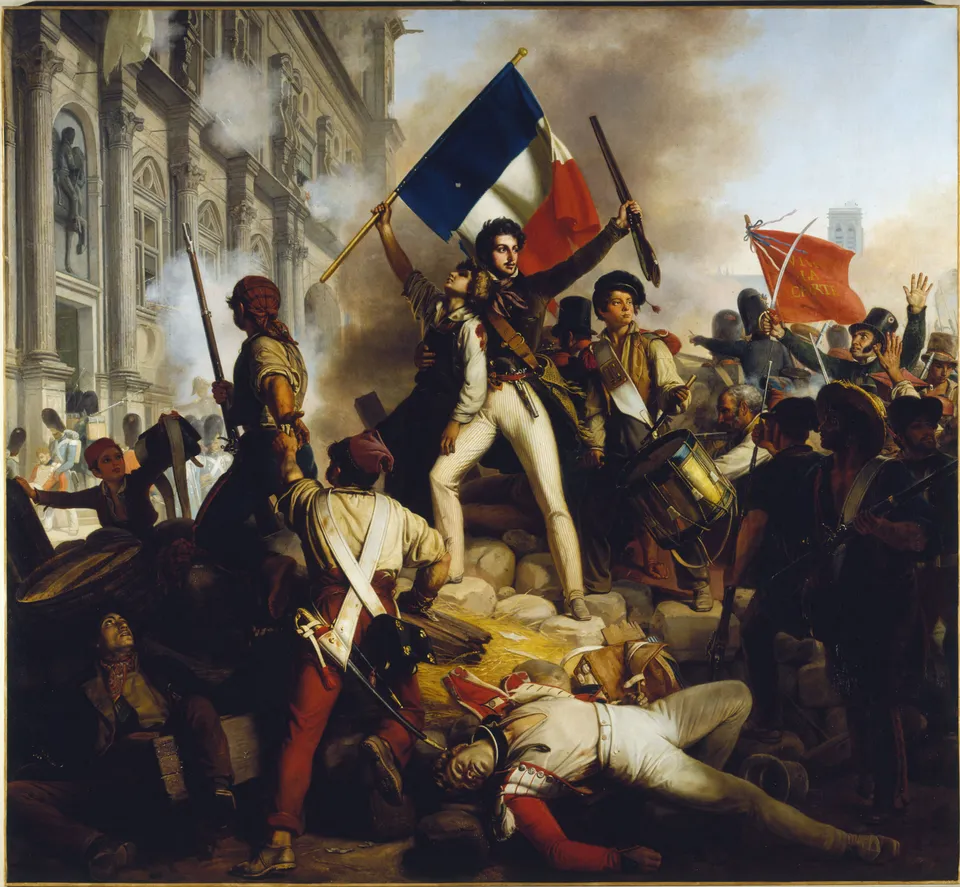
Public domain · Source
Charles X, of the Bourbon dynasty restored by the Vienna settlement, tried to turn back to the old regime, compensating the émigré nobles among other measures. On 25 July 1830 he issued ordinances dissolving the chamber, muzzling the press and narrowing the franchise. From 27 to 29 July the people of Paris fought behind barricades (the Three Glorious Days) and drove him out, and the liberal Louis Philippe became king. Delacroix painted the event as Liberty Leading the People.
The revolution spread across Europe: Belgium won independence from the Netherlands, but risings in Poland and Italy were crushed. The July Monarchy was a regime of the wealthy bourgeoisie in which only men of property could vote, and the discontent of workers and the lesser middle class led to the February Revolution of 1848.