Conflict8 May 1429

Joan of Arc Relieves Orléans

Also called: Siege of Orléans

In May 1429 a French army led by the peasant girl Joan of Arc lifted the English siege of Orléans, and Charles VII was crowned at Reims.
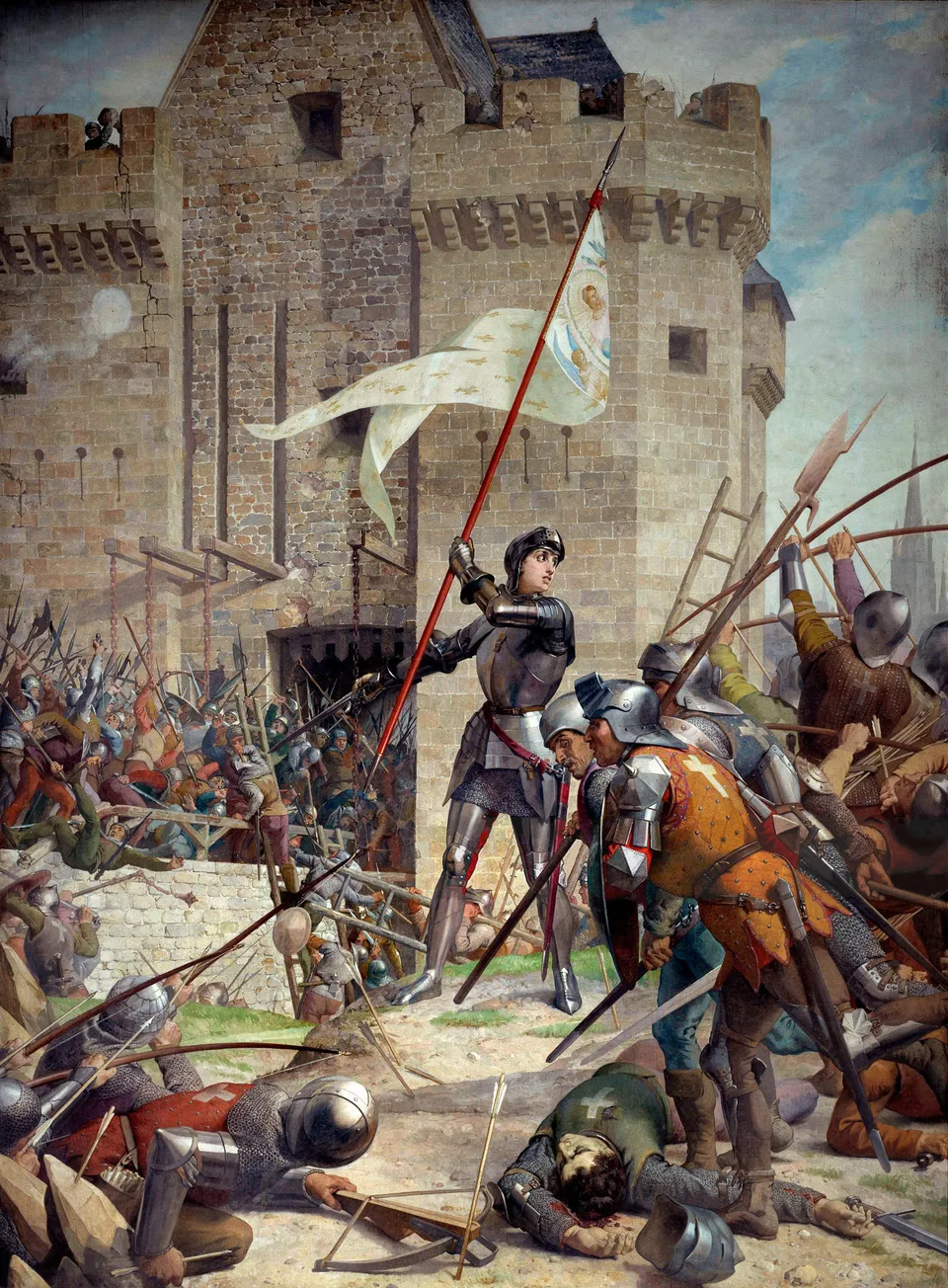
Joan of Arc at the siege of Orléans — Jules Eugène Lenepveu, mural in the Panthéon, Paris, 1886–1890

Eugène Lenepveu · Public domain · Source

In 1428 the English and their Burgundian allies held northern France and besieged Orléans, the key crossing of the Loire. Joan, a girl from the village of Domrémy who said she heard the voices of God’s messengers, went to the Dauphin Charles, obtained an army and lifted the siege of Orléans on 8 May 1429. Driving back the English, she then brought Charles VII to be crowned in Reims Cathedral on 17 July.

Captured by the Burgundians in 1430 and handed over to the English, Joan was condemned as a heretic by a church court at Rouen and burned in 1431. Yet the patriotism she inspired turned the war in France’s favour. A retrial in 1456 cleared her name, and she was made a saint in 1920. In the same year (1429) the Nongsa jikseol (Straight Talk on Farming) was compiled in Joseon by order of King Sejong.

The map in 1429

OpenFreeMap © OpenMapTiles © OpenStreetMap contributors

States at the time
France · victor
England · defeated
Places
Orléans, Reims

People

  • Joan of Arc1412 – 1431

    commander · French peasant girl who lifted the siege of Orléans in the Hundred Years’ War and had Charles VII crowned at Reims; handed to the English and burned

Before and after

Earlier
1346 Battle of Crécy

Related works

  • TV episode: Naked World History Episode 42: The Hundred Years' War (Joan of Arc)TV episode · 2022 · Lim Seung-hwi · tvN

Themes that include this event

  • Late Medieval Europe and the Renaissance1077 – 1517

    From Canossa to the eve of the Reformation — papal power at its height and in decline, towns and parliaments, royal power growing through the Hundred Years’ War and the Black Death, and the Renaissance and printing