Science1434

Self-striking water clock

Jang Yeong-sil built the Jagyeongnu, a water clock that struck bells, drums and gongs on its own; it kept the official time at Gyeongbokgung.
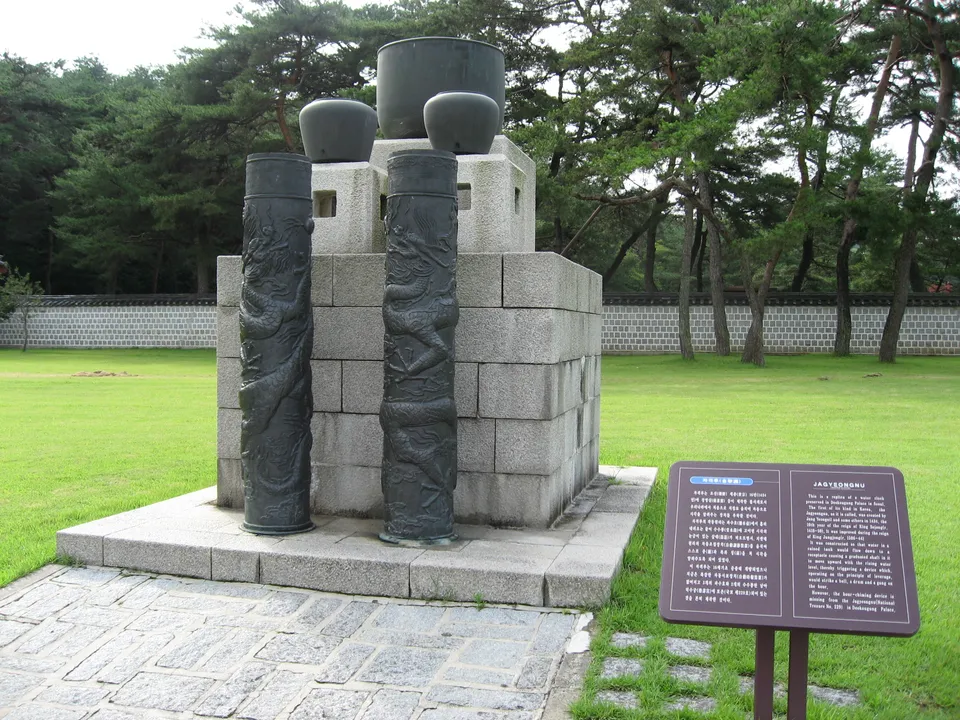
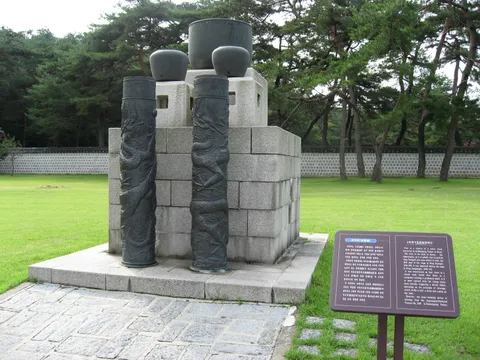
Surviving vessels of the 1536 Jagyeongnu water clock at Deoksugung

hendry (Flickr) · CC BY 2.0 · Source

Sejong promoted Jang Yeong-sil, a government slave of unusual talent. In the Jagyeongnu, water flowing steadily into a vessel lifted a rod that released balls; these set figures in motion to strike a bell each hour, a drum at each night watch and a gong at each subdivision. In 1434 it was installed in the Borugak pavilion south of Gyeonghoeru and kept the official time. The same year the hemispherical sundial Angbu ilgu was set up at Hyejeonggyo Bridge and before Jongmyo so that commoners could tell the time. The clock that survives at Deoksugung is part of a version rebuilt under Jungjong in 1536.

The map in 1434

OpenFreeMap © OpenMapTiles © OpenStreetMap contributors

States and rulers at the time
Joseon — Sejong
Places
Gyeongbokgung

People

  • Jang Yeong-sil

    creator · Scientist of humble birth who built the self-striking water clock for Sejong and helped make astronomical instruments

  • Sejong the Great1397 – 1450

    monarch · Fourth king of Joseon, creator of Hangul, patron of science and of the northern frontier

Before and after

Earlier
1434 Gabin type cast

Themes that include this event

  • Science and Technology HeritageAD 633 – 1861

    From Cheomseongdae to the Daedong yeojido — instruments and maps that measured the sky, kept time, gauged rain and charted the land