Great Kantō Earthquake and the Massacre of Koreans
Also called: Great Kanto Earthquake, Kantō Massacre, 1923 Great Kantō earthquake
On 1 September 1923 a great earthquake and fires struck Tokyo and Yokohama, leaving over 100,000 dead or missing. In the chaos rumours that “Koreans are rioting” spread, and vigilantes, soldiers and police massacred large numbers of Koreans.
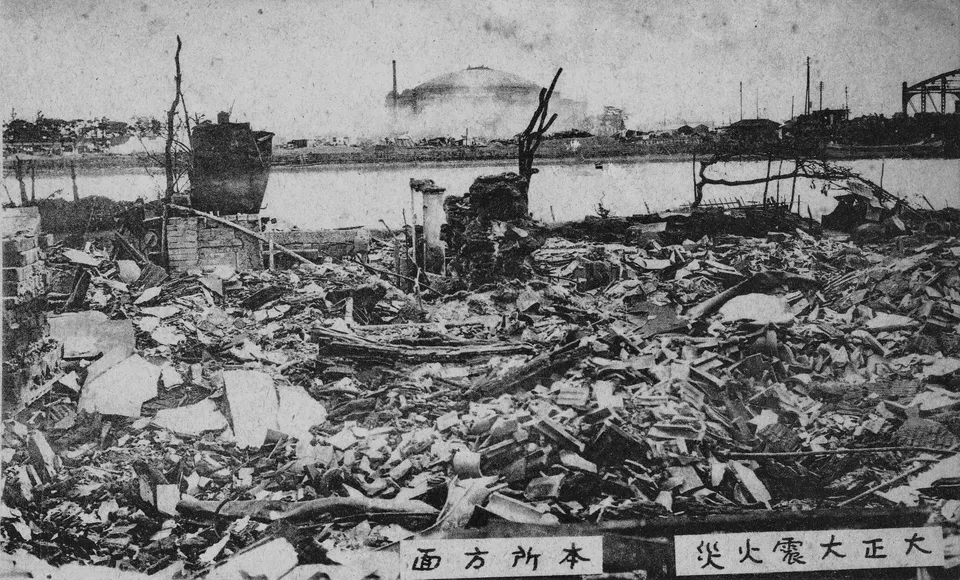
Unknown author · Public domain · Source
Just before noon on 1 September an earthquake of around magnitude 7.9, centred under Sagami Bay, struck, and cooking fires spread until most of Tokyo and Yokohama burned. Some 105,000 people are estimated to have died or gone missing. The next day the government declared martial law, while baseless rumours that “Koreans are poisoning wells and setting fires” spread through the police and the press.
Neighbourhood vigilante groups, troops and police blocked the streets, picked out Koreans by their pronunciation and other signs, and killed them. The Independent (Dongnip Sinmun) of the Korean Provisional Government in Shanghai reported 6,661 victims based on an investigation by Koreans in Japan; researchers estimate several thousand. Several hundred Chinese labourers and socialists such as Ōsugi Sakae were also killed. The Japanese government has maintained that no records allowing the facts to be confirmed have been found within the government, and the full truth of the massacre has still not been established.
Punishment went no further than light sentences for some vigilantes. The massacre is remembered as a case in which ethnic discrimination built up under colonial rule erupted into violence amid disaster.