Building of the Gothic Cathedrals
Also called: Gothic architecture, Gothic style
The Gothic style, begun at the abbey of Saint-Denis near Paris in the mid-12th century, produced cathedrals such as Chartres and Notre-Dame with pointed arches, soaring spires and great stained-glass windows.
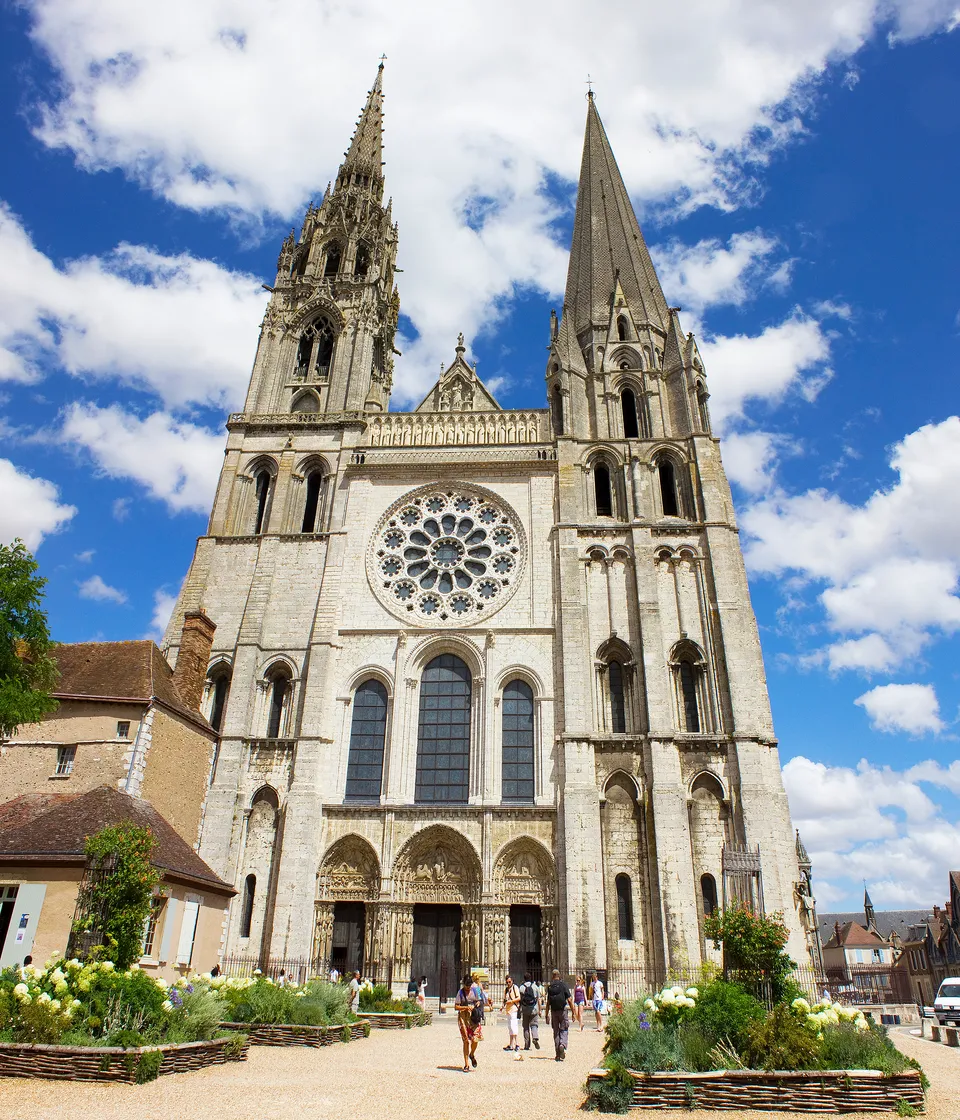
Dcconsta · CC BY-SA 3.0 · Source
The Romanesque churches of the 11th and early 12th centuries, with thick walls, round arches and small windows, were heavy and dark (Pisa Cathedral). The Gothic style, which began with the new choir built by Abbot Suger at Saint-Denis in 1144, gathered the weight onto piers with pointed arches and rib vaults and propped the walls from outside with flying buttresses, so that buildings could rise high and walls could give way to vast windows.
Spires reaching for the sky and stained glass telling Bible stories expressed a faith that sought to draw near to God. Notre-Dame de Paris (begun 1163), Chartres (rebuilt after a fire in 1194), Reims, Amiens and, in Germany, Cologne Cathedral (begun 1248) are leading examples. The cathedrals were the pride of their towns and were built by the townspeople over decades or even centuries. At the same time Goryeo was producing its inlaid celadon.