Goryeo Water-Moon Avalokiteshvara
Also called: Suwol gwaneumdo, Goryeo Buddhist painting
Goryeo Buddhist paintings of Avalokiteshvara seated on a rock by the water — rich colour and gold with exquisitely transparent veils.
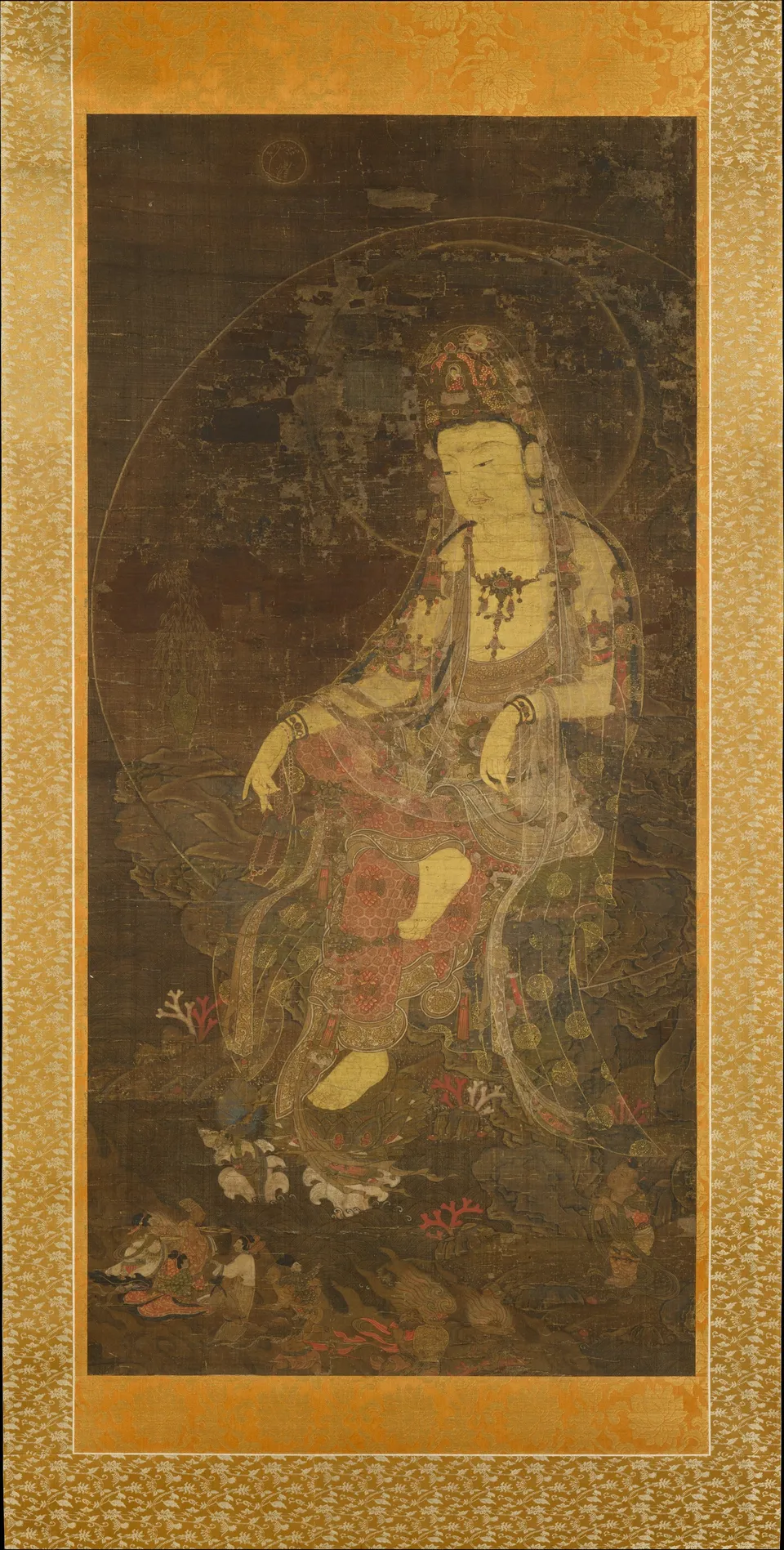
The subject comes from the Avatamsaka Sutra: Avalokiteshvara seated on a rock at Mount Potalaka by the southern sea, receiving the pilgrim boy Sudhana. In late Goryeo the royal house and powerful families sponsored many such paintings. They use red, green and gold paint yet render the transparent silk veil over the body and the patterns of the robes with extraordinary delicacy. The painting commissioned in 1310 by Consort Sukbi of King Chungseon (Kagami Shrine, Japan) is a masterpiece, as is Hyeheo’s Avalokiteshvara with a teardrop-shaped halo (Sensō-ji, Japan).
About 160 Goryeo Buddhist paintings survive, most of them in Japan and elsewhere abroad.