Gallipoli Campaign
Also called: Dardanelles Campaign, Battle of Çanakkale
British, French, Australian and New Zealand troops landed on the Gallipoli peninsula to force the Dardanelles and strike at Istanbul, but were held by the Ottoman army and withdrew after eight months.
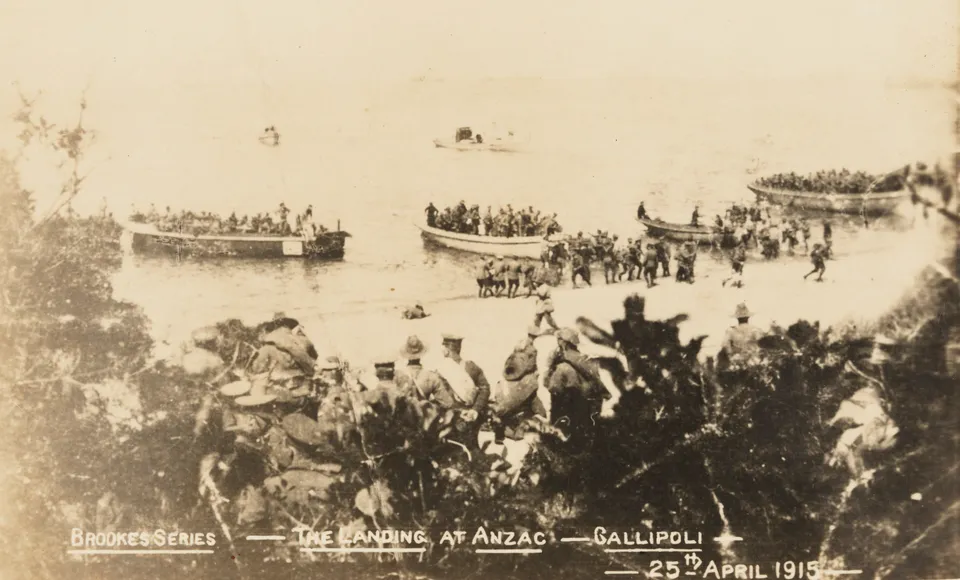
Published by Brookes · Public domain · Source
When the Ottoman Empire joined the Central Powers, Churchill, First Lord of the Admiralty, and others sought to force the Dardanelles, threaten Istanbul and open a sea route to Russia. After an attempt to break through with warships alone was stopped by mines in March 1915, British and French troops and the Australian and New Zealand Army Corps (ANZAC) landed on the Gallipoli peninsula on 25 April.
Ottoman forces, with commanders such as Mustafa Kemal, held the heights, and the fighting settled into trench warfare close to the beaches. The Allies had withdrawn completely by January 1916, after casualties on both sides running into the hundreds of thousands. Australia and New Zealand commemorate the landing as Anzac Day, and in Turkey it is remembered as the victory that made Kemal’s name.