PoliticsTwelfth month of 265

Founding of the Jin (Western Jin)

Also called: Founding of the Western Jin

Sima Yi’s grandson Sima Yan received the throne from the Wei emperor and founded Jin, ending Wei after 45 years.
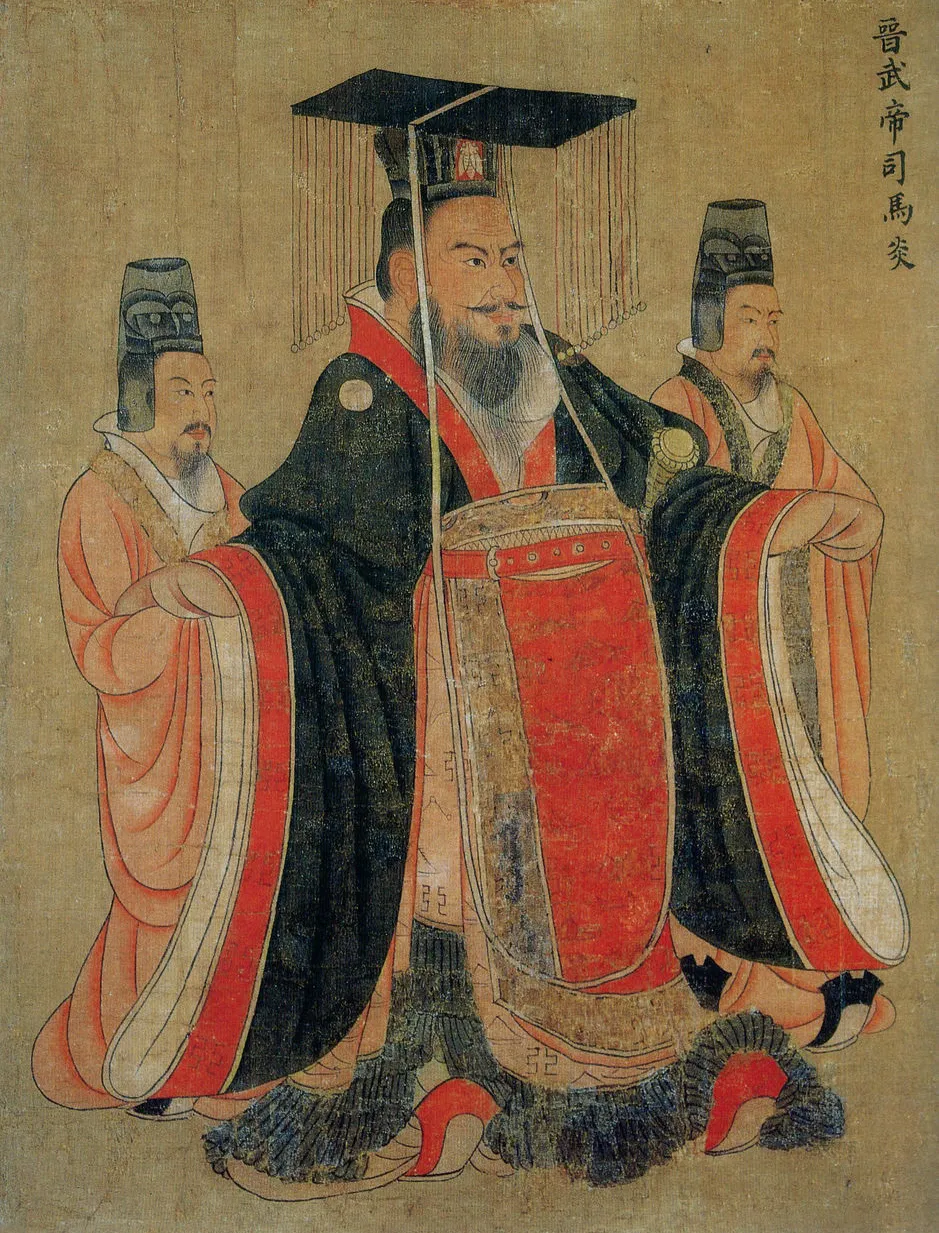
Sima Yan, Emperor Wu of Jin — Yan Liben, Thirteen Emperors Scroll

Yan Li-pen · Public domain · Source

When Sima Zhao died in 265, his son Sima Yan succeeded him as King of Jin and in the twelfth month received the abdication of Cao Huan, the last Wei emperor, becoming Emperor Wu. The capital remained Luoyang. It was a repeat of the way Cao Pi had taken the throne from the Han. The dynasty is called the Western Jin to distinguish it from the Eastern Jin that later moved south of the Yangtze.

The map in AD 265

OpenFreeMap © OpenMapTiles © OpenStreetMap contributors

States and rulers at the time
Cao Wei · fell — Emperor Yuan (Cao Huan)
Western Jin · founded
Places
Luoyang

People

  • Sima YanAD 236 – AD 290

    monarch · Founding emperor of the Western Jin (Emperor Wu), grandson of Sima Yi, who took the Wei throne in 265 and unified China by conquering Wu in 280

Before and after

Earlier
AD 263 Fall of Shu Han

Themes that include this event

  • The Three KingdomsAD 184 – AD 280

    From the Yellow Turban Rebellion to the Jin reunification — a century of Wei, Shu and Wu, the age of Cao Cao, Liu Bei and Sun Quan