Founding of the Kingdom of Saudi Arabia
Rising from Nejd, Ibn Saud drove Hussein’s family out of the Hejaz, unified most of the Arabian Peninsula and founded the Kingdom of Saudi Arabia.
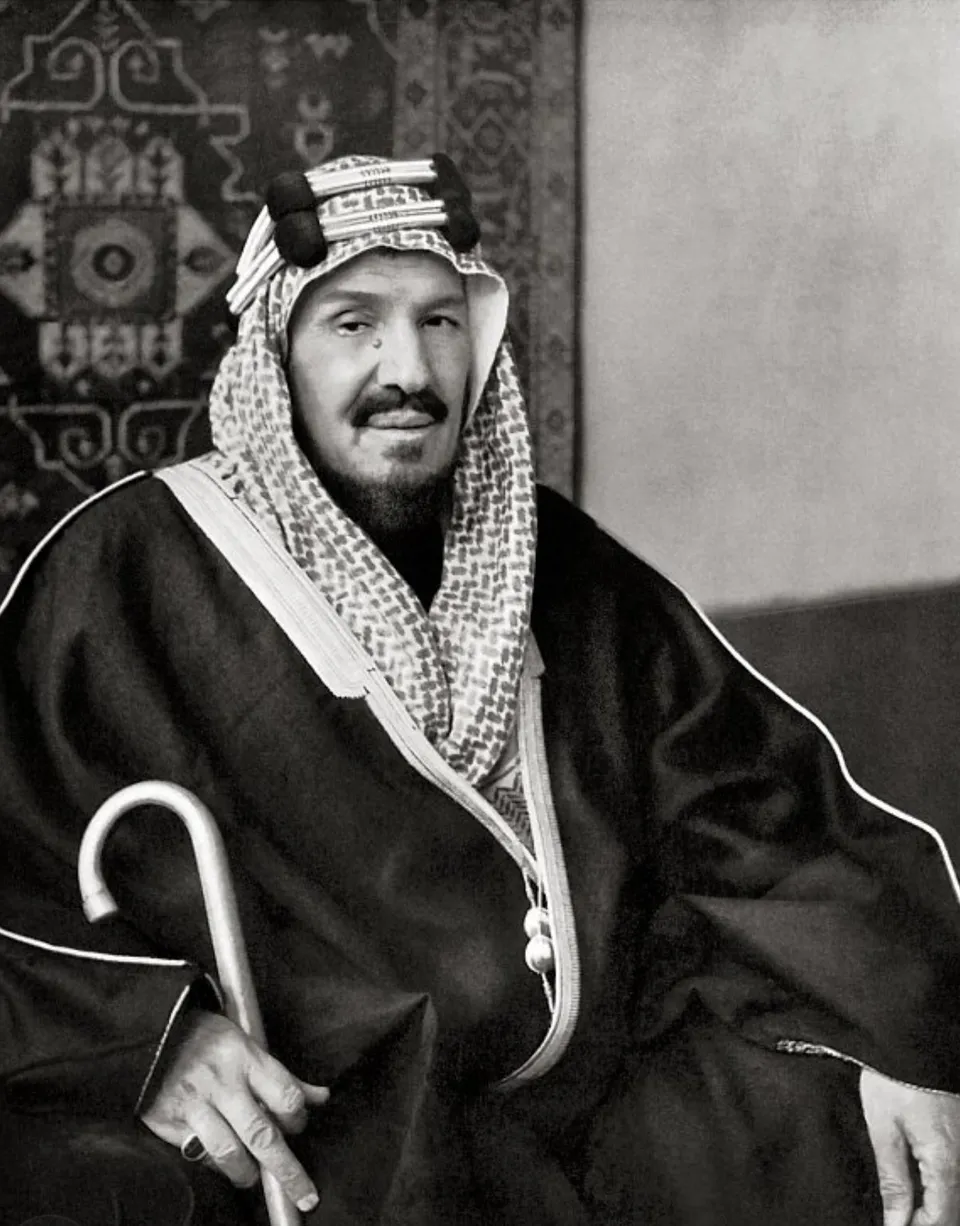
Lcxzdf56 ( talk · contribs ) · Public domain · Source
The House of Saud, allied with the Wahhabi movement in the eighteenth century, had collapsed in the nineteenth, but revived when Ibn Saud retook Riyadh in 1902. Leading the Ikhwan, tribal warriors devoted to Wahhabism, he expanded Nejd and in 1924–1925 took Mecca, Medina and Jeddah, driving from the Hejaz the Hashemite family that had led the Arab Revolt. Britain recognized his independence in the Treaty of Jeddah (1927), and on 23 September 1932 he joined Nejd and the Hejaz as the Kingdom of Saudi Arabia, named after his dynasty.
As guardian of Islam’s two holy cities, the kingdom was an absolute monarchy founded on strict Islamic law. In 1938 an American company struck a major oil field at Dammam in the east; oil transformed the country’s fortunes and drew it close to the United States.