Founding of the Khitan Liao
Also called: Founding of the Liao dynasty, Khitan Empire
Yelü Abaoji united the Khitan tribes and proclaimed himself emperor in 916. Destroying Balhae in 926 and gaining the Sixteen Prefectures in 936, the Khitan became the great power of the north.
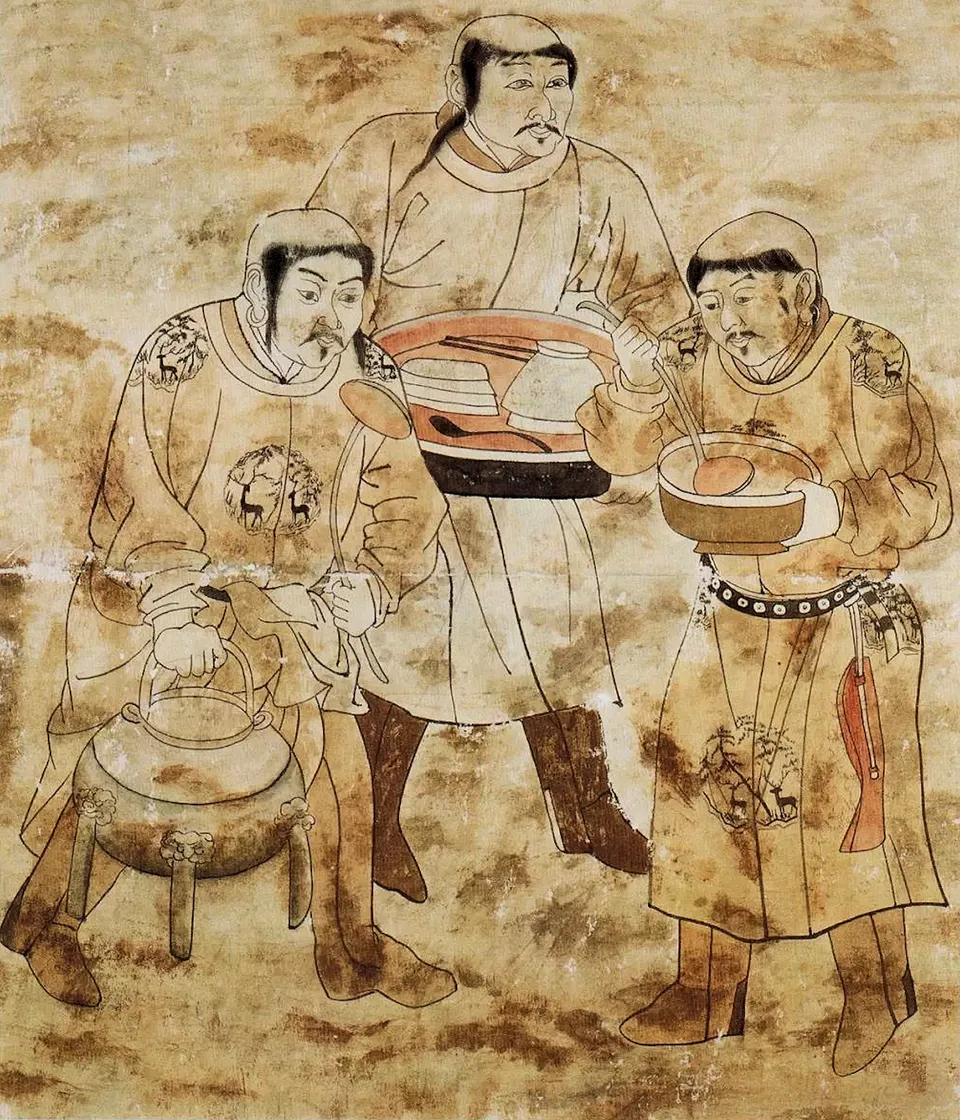
Circa 12th century CE painter · Public domain · Source
As the Tang declined, the Khitan nomads of the upper Liao River were united under Yelü Abaoji. He proclaimed himself emperor in 916, set his capital at Shangjing (Linhuang), and had a Khitan script devised on the model of Chinese characters. In 926 he destroyed Balhae and set up the kingdom of Dongdan in its lands.
His successor Taizong received the Sixteen Prefectures from the Later Jin in 936, extending Khitan rule to farmland south of the Great Wall, and in 947 took the dynastic name Liao. The Liao ruled nomads through tribal institutions and farmers through Chinese-style prefectures and counties — a dual administration of Northern and Southern chancelleries. It was hostile to Goryeo, which had taken in Balhae refugees (the Manbugyo Bridge incident, 942), and while contending with the Song it invaded Goryeo three times from 993.