Politics23 July 1921

Founding of the Chinese Communist Party

Also called: First National Congress of the CCP

In July 1921 thirteen delegates met in the French Concession of Shanghai and, with Comintern support, founded the Chinese Communist Party, choosing Chen Duxiu as its leader.
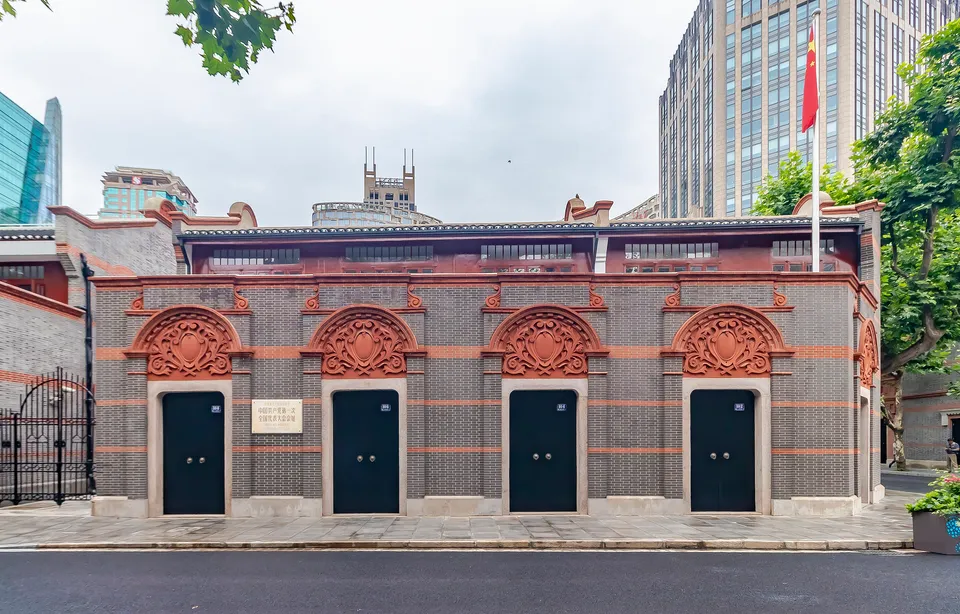
The house in Shanghai’s former French Concession where the CCP’s First National Congress met, now a memorial

ScareCriterion12 · CC BY-SA 4.0 · Source

After the Russian Revolution and the May Fourth Movement, communist study groups formed in Beijing, Shanghai and elsewhere around Li Dazhao and Chen Duxiu, and the Comintern sent agents to help organize a party. The First National Congress opened on 23 July 1921 in a house in Shanghai’s French Concession; among the thirteen delegates, who represented some fifty members, was Mao Zedong from Hunan. When concession police raided the meeting, the final session moved to a boat on South Lake at Jiaxing in Zhejiang, and Chen Duxiu, who was not present, was chosen as leader.

Beginning as a small circle of intellectuals, the party grew by leading labour movements, and on the Comintern’s instructions formed the First United Front with the Nationalists in 1924.

The map in 1921

OpenFreeMap © OpenMapTiles © OpenStreetMap contributors

States at the time
Republic of China

People

  • Chen Duxiu1879 – 1942

    leader · Founder of the magazine New Youth who led the New Culture Movement under the banner of “democracy and science”, then helped found the Chinese Communist Party and became its first leader

  • Mao Zedong1893 – 1976

    participant · Chairman of the Chinese Communist Party who won the civil war and founded the People’s Republic in 1949, and launched the Great Leap Forward and the Cultural Revolution

Before and after

Themes that include this event

  • Republican China and Imperial Japan1912 – 1949

    The age when the Republic of China, born of the 1911 Revolution, passed through warlord division, the May Fourth Movement, the United Front and the Northern Expedition, fought Japan’s invasion and split in civil war — as Japan moved from Taishō democracy through the Manchurian Incident and military coups to the war in China and the Co-Prosperity Sphere, and colonized Korea resisted through the March First Movement and armed struggle