Conflict21–26 October 1920

Battle of Cheongsan-ri

Kim Jwa-jin’s Northern Military Administration army, Hong Beom-do’s Korean Independence Army and others fought more than ten engagements over six days around Cheongsan-ri and defeated the Japanese, the greatest victory of the armed independence struggle.
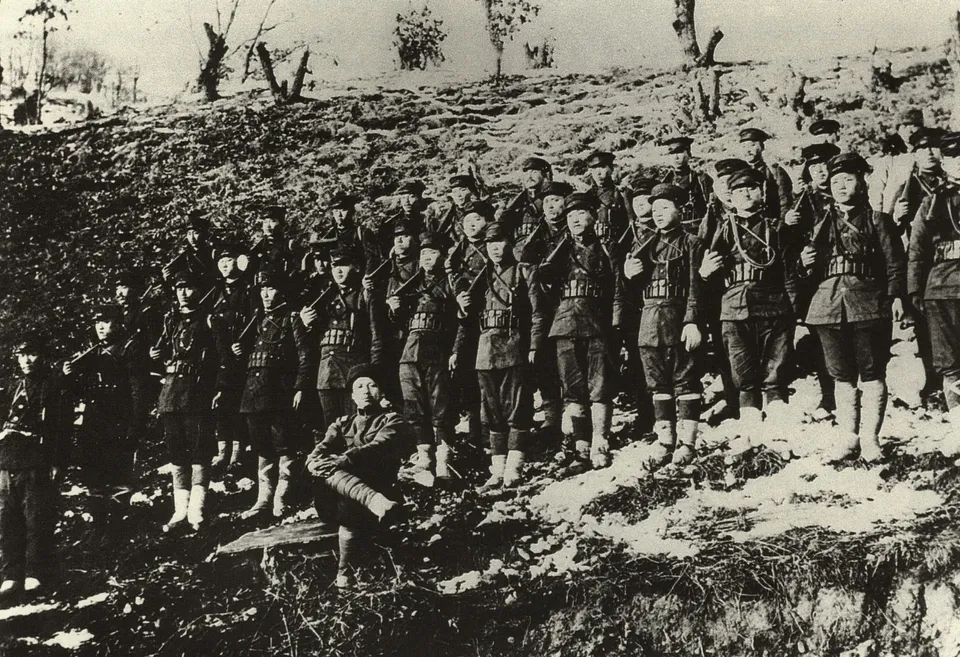
Soldiers of the Northern Military Administration after the victory at Cheongsan-ri, Kim Jwa-jin seated in front — 1920

Unknown author · Public domain · Source

In October 1920 Japan staged the Hunchun incident, paying bandits to attack its consulate at Hunchun, and used it to send a large army into Manchuria. The independence forces, withdrawing toward Mount Baekdu, met the Japanese in the valleys of Cheongsan-ri, Helong County.

Fighting began at Baegunpyeong on 21 October and continued at Wallugu, Cheonsupyeong, Eorangchon and Godongha until the 26th. Kim Jwa-jin commanded the Northern Military Administration, with Lee Beom-seok leading its training unit. The Provisional Government announced some 1,200 Japanese dead (figures vary by source).

The map in 1920

OpenFreeMap © OpenMapTiles © OpenStreetMap contributors

States and rulers at the time
Japan · defeated — Emperor Taishō
Republic of China
Places
Cheongsan-ri (Qingshanli)

People

  • Kim Jwa-jin1889 – 1930

    commander · Commander of the Northern Military Administration who led the Battle of Cheongsan-ri and later the Sinminbu

  • Hong Beom-do1868 – 1943

    commander · Commander of the Korean Independence Army who won at Bongo-dong and fought at Cheongsan-ri; died in Kazakhstan

  • Lee Beom-seok1900 – 1972

    commander · Officer at the Battle of Cheongsan-ri, later chief of staff and Second Detachment commander of the Korean Liberation Army

Before and after

Earlier
1920 Gando Massacre