Fall of the Yuan and Founding of the Ming
Also called: Founding of the Ming, Red Turban Rebellion
Zhu Yuanzhang, who rose amid the Red Turban Rebellion of the late Yuan, became emperor at Nanjing in 1368 and founded the Ming. When Ming forces took Dadu that year, the Yuan court withdrew to the Mongolian plateau as the Northern Yuan.
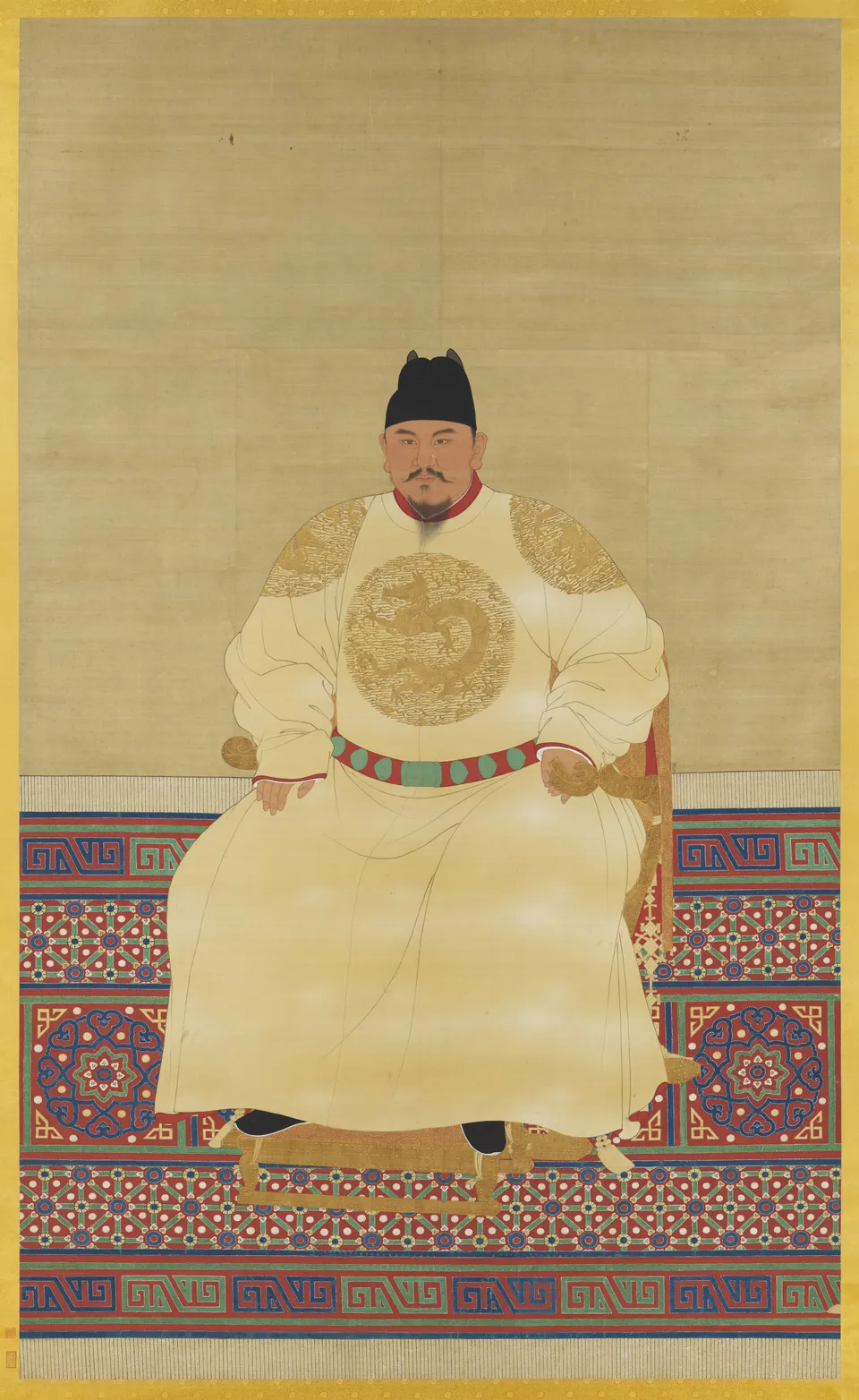
Unknown author · Public domain · Source
In the 14th century the Yuan was torn by succession struggles, prices soared from lavish Tibetan Buddhist rites and over-issued paper money, and Yellow River floods and famine followed. In 1351 the Red Turban Rebellion, launched by White Lotus believers among peasants conscripted for dyke repairs on the Yellow River, spread across the country. Zhu Yuanzhang, a poor peasant turned monk, joined the Red Turbans and built up his own power, taking Jiqing (Nanjing) in 1356 and then defeating rivals such as Chen Youliang (Battle of Lake Poyang, 1363) and Zhang Shicheng.
In 1368 Zhu proclaimed himself emperor at Yingtian (Nanjing), naming his dynasty Ming and his reign Hongwu. That year Xu Da’s army took Dadu, the Yuan emperor Toghon Temür fled to Shangdu, and the Yuan line continued on the Mongolian plateau as the Northern Yuan. A Han Chinese dynasty had reunited China; it banned Mongol customs and restored the Confucian order.
Some Red Turbans invaded Goryeo in 1359 and 1361, even taking Gaegyeong. During the Yuan–Ming transition King Gongmin pursued anti-Yuan reforms, and when the Ming claimed the lands north of Cheollyeong in 1388, Goryeo launched an expedition against Liaodong that ended in Yi Seong-gye’s retreat from Wihwa Island and a change of regime.